OEM Guide to Preserving Taste Consistency Across Restaurant Multi-Location Expansion
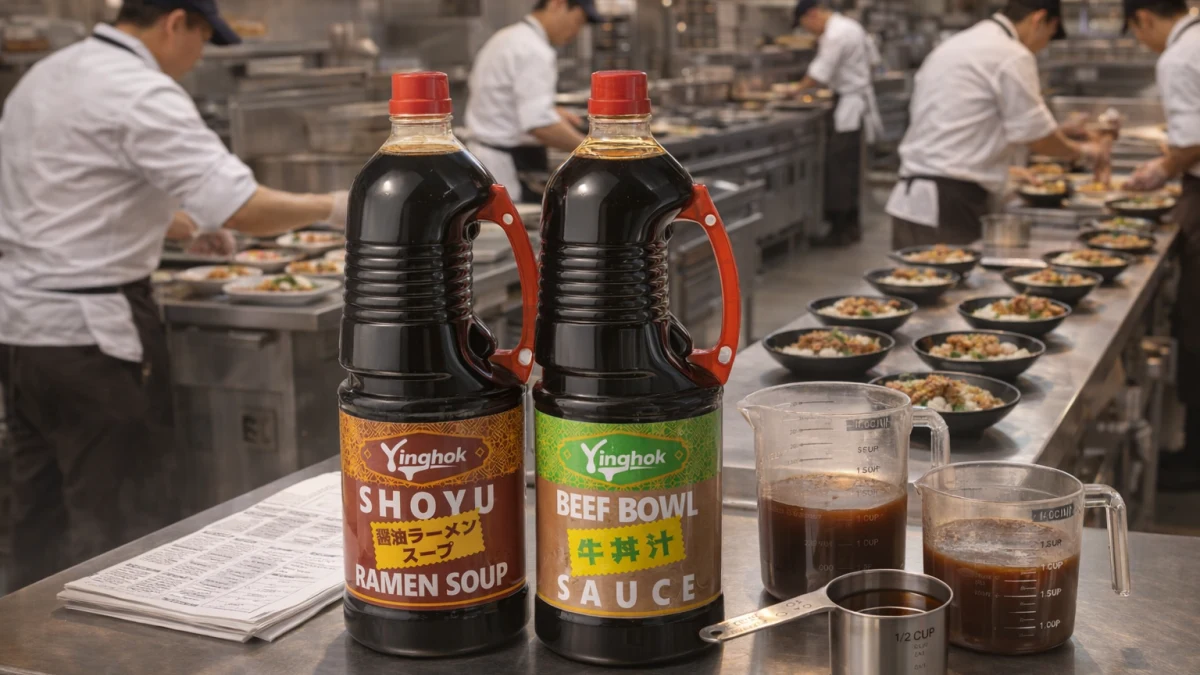
OEM Guide to Preserving Taste Consistency Across Restaurant Multi-Location Expansion
A restaurant that achieved high ratings and prosperity at a single location loses its reputation from the second location onward—this is a typical failure repeated throughout the foodservice industry. The cause often lies in "taste reproducibility" and "personnel-dependent management." This article organizes the principles of taste standardization and the process of designing reproducibility through OEM soup and sauce development, aimed at executives planning ramen shop franchising or multi-location expansion of Chinese and Korean restaurant chains. Use it as a guide to building a system robust enough to withstand future mass production and overseas expansion.
Why Popular Single Locations Tend to Fail From the Second Location Onward
In most cases, the success of the first location is supported by the owner's experience and intuition. The heat control during prep, the technique for extracting broth, the final seasoning adjustments—these exist only in the owner's hands, never put into words. This state is called "personnel dependency."
When you open a second location while still personnel-dependent, the first thing to suffer is prep quality. At locations where the owner cannot be permanently present, the taste depends on staff proficiency. Furthermore, the owner's experience can no longer absorb the subtle variations caused by ingredient lots or weather.
As a result, taste differences between locations, cost variation, and slower service speed occur in a chain reaction. You must understand that multi-location expansion is not about "increasing the owner's clones" but about "converting taste into a system."
From Intuition Dependency to "Quantification": The Principles of Standardization
The starting point of multi-location expansion is the work of translating the owner's intuition into data. Neglect this, and no matter how many locations you open, you will be unable to control the taste.
Quantify Three Elements: Recipes, Processes, and Taste Standards
Standardization begins by fixing three elements as numerical values: recipes (blending ratios and quantities), processes (heating temperature, time, and procedures), and taste standards (sensory indicators such as salinity, sugar content, pH, and viscosity).
Replace the intuitive notion of "just the right richness" with measurable values such as salinity and sugar content. This enables anyone to make the same quality judgment.
Five Challenges That Surface During Multi-Location Expansion
When you expand without sufficient standardization, the following challenges occur simultaneously.
- Increased staff training burden: Verbal transmission of taste makes training time-consuming
- Prep quality differences: Output varies by location and by staff member
- Cost variation: Vague quantity management makes ingredient costs unstable
- Slower service speed: Complex prep processes become a bottleneck on the floor
- Taste differences between locations: "That taste"—the reason customers return—breaks down
The Design Philosophy of "The Same Taste No Matter Who Prepares It" That Supports Franchise Expansion
Franchising (FC) requires serving a taste that does not depend on the franchisee's cooking skills. Unless headquarters can guarantee "the same taste no matter who prepares it," the brand itself cannot stand.
What becomes effective here is a design that brings the core soups, sauces, and seasoning liquids close to their finished form at the factory, simplifying in-store work to "diluting, heating, and plating." The more you reduce variable factors on the store side, the higher the reproducibility.
Standardization Benefits of Using OEM Soups and Sauces
When you design soups and sauces through OEM (outsourced manufacturing), the taste of a popular shop can be stably mass-produced at the factory. Because blending and heating are controlled on a dedicated line, taste variation between lots can be suppressed.
Categories such as ramen soup, hot pot soup, various sauces, and fermented seasonings greatly influence the cooking burden at a location. By carving these out to external design, the floor can concentrate on finishing and customer service.
The Division of Roles Between Central Kitchens and OEM
As multi-location expansion progresses, a point arrives where you consider building your own central kitchen. However, capital investment and operating costs are substantial, and there is no need to insource all processes from the startup phase.
Entrust the core seasoning liquids and base soups to external OEM, while handling final processing and store-specific customization in-house—this division of roles is realistic. By designing taste on a "mass-production premise" from an early, small-scale stage, you can avoid the need to redesign during expansion.
Six Criteria for Selecting a Manufacturing Partner and Nakano Foods' Supply System
If you select an OEM partner based solely on immediate small-lot support, you will stumble in the future. If you anticipate multi-location expansion and franchising, evaluate based on the following criteria.
Nakano Foods (brand: YINGHOK), a specialist manufacturer of Asian compound seasonings and fermented seasonings, is equipped with a supply system capable of meeting these requirements. Founded in 2009 in Foshan, Guangdong Province, China, the company now operates 5 production sites centered on Foshan and Dalian.
The ability to start with small-lot prototyping and consult comprehensively on ramen soups (over 30 flavor variations), hot pot soups, various sauces, and fermented seasonings is practical for foodservice operators who want to carve out the core of their taste. With HALAL compliance, you can also prepare for demand from inbound tourism to Japan and overseas store openings.
Case Study: Mass-Production-Premise Design Supports Expansion
The process of reproducing a popular shop's taste at a factory begins by interviewing the owner about the recipe and taste standards, then quantifying the sensory indicators. Next, prototyping and sensory evaluation are repeated to finalize the reproduction conditions at the store (dilution ratio, heating time).
By completing this design at the early stage, you can serve the same taste using the same procedure even as you expand to the second location, the fifth location, and on to franchisees. OEM functions not merely as manufacturing outsourcing but as the infrastructure for designing reproducibility.
Nakano Foods supports OEM, ODM, and PB, enabling comprehensive outsourcing from formula development to packaging (1.8L PET containers, gallon cans, bulk commercial bags, and more). For the Japanese market, the establishment of Nakano Foods Japan is planned for October 2026, and a support system for domestic operators is steadily taking shape.
Conclusion: Turn Taste Into a System for Management That Withstands Expansion
The greatest factor in the failure of popular single locations during multi-location expansion is the personnel dependency of taste. By quantifying the owner's intuition into recipes, processes, and taste standards, and designing the core soups and sauces externally through OEM, you can achieve "the same taste no matter who prepares it."
If you anticipate franchising or central kitchen development, it is important to design on a "mass-production premise" from the small-lot prototyping stage and to select a partner equipped with certifications, supply capacity, and operational understanding. Start by identifying "what difference within your own taste should be standardized." As your next step, consider an OEM consultation or obtaining samples of soups, sauces, and seasoning liquids.
Request a free sample
Try our products with a free sample. Feel free to get in touch.
Request a sampleRelated Articles
 Guide
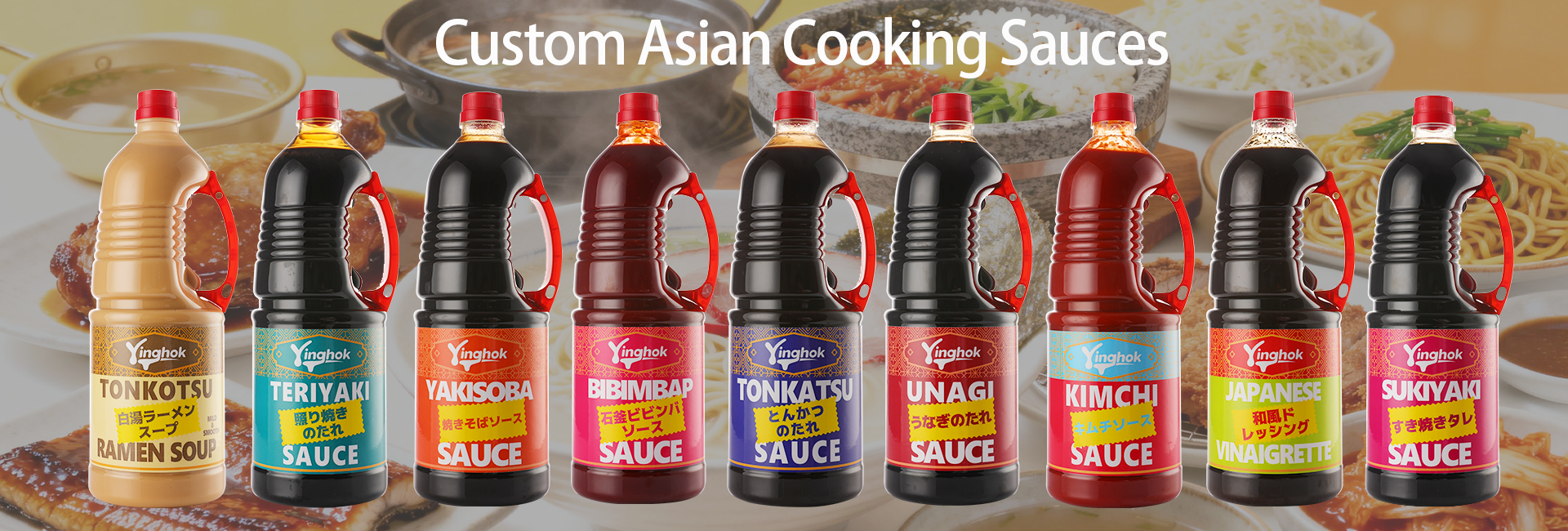
GuideCompound Seasoning OEM/Private Label: Bringing Your Own-Brand Seasonings to the World
A guide to developing compound seasonings via OEM/private label. Covers integrated production of sauces, tare, and soup bases, HALAL compliance, Japan-quality export capabilities, and key points from small-batch prototyping to mass production—written for B2B procurement professionals.
 Guide
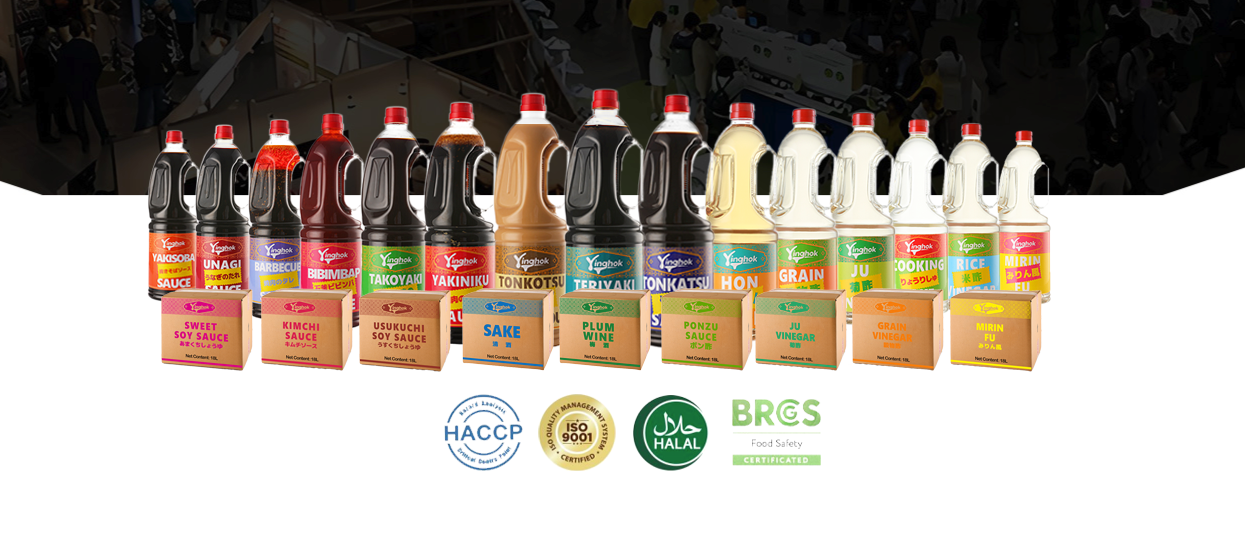
GuideNew Plant Boosts Reach from 50 to 100 Countries | Asian Seasoning OEM
A guide to Asian seasoning OEM/PB supply capabilities. Learn how Nakano Foods aims to expand from 50+ to 100 countries through its new plant—covering production capacity, certifications, and multinational flavor expertise for trading companies and product developers.
 Guide
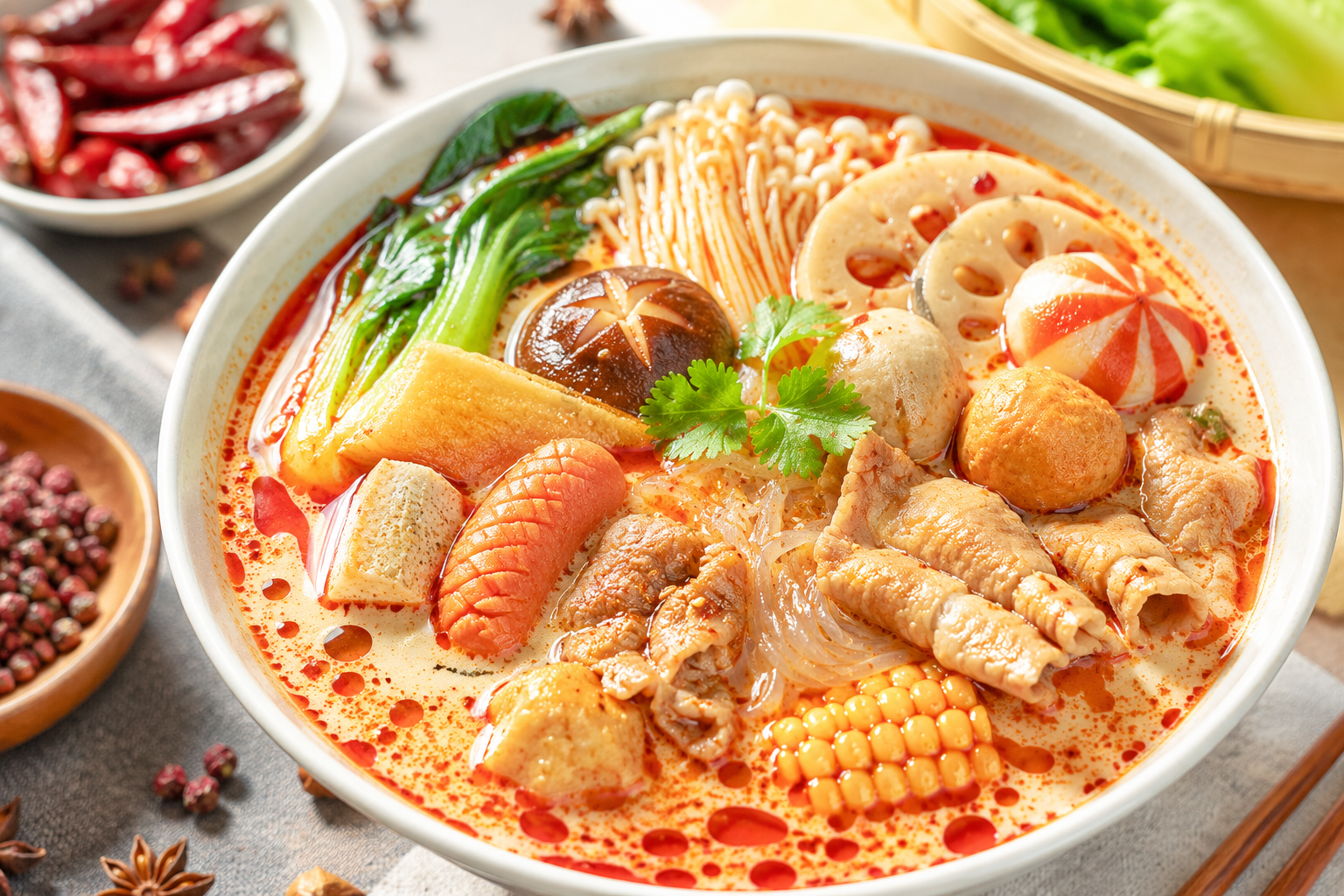
GuideStandardizing Flavor and Soup Base OEM: The Key to Private Labeling Mala Tang
The biggest hurdle in creating your own mala tang (spicy hot soup) product is flavor standardization. The key to reproducing a popular restaurant's taste at scale lies in the soup base. This article explains the essentials of OEM, private label, and retort-pouch production.