Improving Gross Margin with Food OEM | How Food Waste Reduction and Cost Optimization Work
Improving Gross Margin with Food OEM | How Food Waste Reduction and Cost Optimization Work
Food OEM is commonly understood as "a means to lower costs." However, for procurement and product planning managers at food manufacturers and foodservice chains, the more important perspective is "improving gross margin through food OEM." Food waste reduction is only one part of cost cutting; the true essence lies in rethinking the profit structure—encompassing inventory, manufacturing efficiency, and opportunity loss.
This article breaks down the mechanism by which food waste squeezes profit and explains the logic of how leveraging OEM improves gross margin. It also organizes the criteria for selecting an OEM partner to achieve long-term cost optimization.
Food Waste Is Not Just a Loss of "Raw Material Costs"
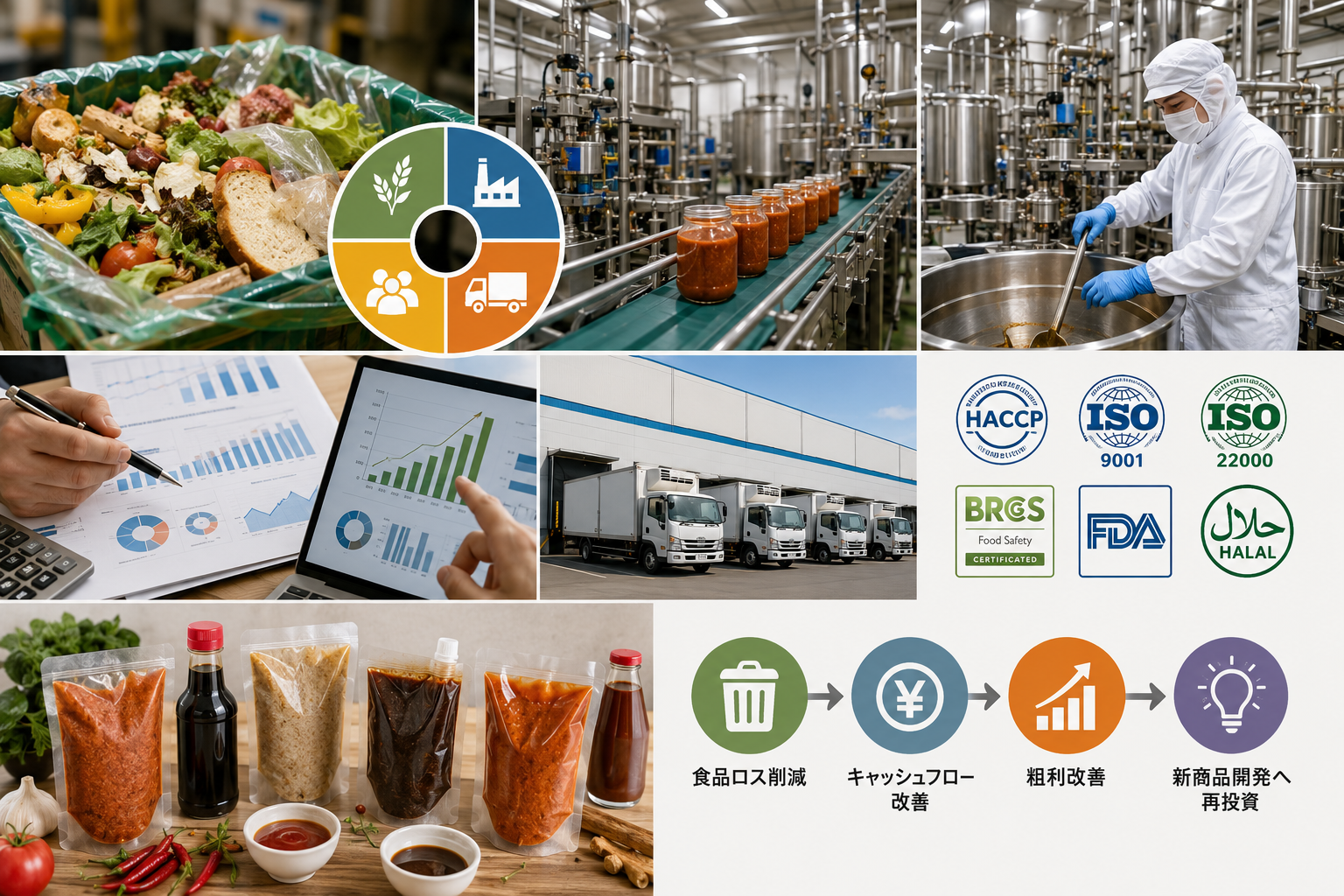
When thinking about food waste reduction, people tend to imagine only the purchase price of the discarded raw materials. In reality, the loss is far greater. That is because discarded products carry not only raw material costs but also accumulated manufacturing, logistics, storage, and labor costs.
Four Costs Accumulated in Discarded Products
Once a product has entered the production line, it absorbs multiple costs. The moment it is discarded, all of these turn into unrecoverable losses.
- Raw material costs: the cost of purchased ingredients and seasonings
- Manufacturing costs: expenses for line operation, energy, and processing
- Logistics and storage costs: warehouse space, refrigeration/freezing, and transportation costs
- Labor costs: the labor invested in manufacturing, inspection, and inventory management
In other words, the loss from a single unit of food waste often swells to several times the raw material cost. When considering gross margin improvement, making these "hidden losses" visible is the starting point.
Gross Margin Improvement Starts with "Loss Reduction" Rather Than "Sales Growth"
When it comes to raising gross margin, many managers think of expanding sales. However, growing sales requires promotional expenses and customer acquisition costs, and the gross margin rate itself does not necessarily improve.
By contrast, an approach that reduces the factors eroding profit directly lifts the gross margin rate without requiring investment. Food waste, excess inventory, expired products, surplus raw materials, and low equipment utilization—all of these are factors that quietly erode profit.
In this "loss-reduction" approach to gross margin improvement, leveraging OEM is an extremely effective option—because production volume can be optimized to match demand.
The Logic of How OEM Structurally Improves Gross Margin
The reason leveraging OEM leads to gross margin improvement is not just unit-price negotiation. It lies in changing the production structure itself.
Optimizing Inventory Through Demand-Matched Production
In-house plants tend to fall into "overproduction" in order to maintain utilization rates. This results in excess inventory, expired products, and surplus raw materials. With OEM, you can order in line with demand and curb food waste through inventory optimization.
Efficiency Gains Through Production Consolidation
OEM manufacturers consolidate production across multiple companies. This raises equipment utilization and enables raw materials to be procured in large lots. As a result, per-unit manufacturing costs are easier to keep down, and the party outsourcing can also enjoy these benefits.
With a manufacturer that has a production capacity exceeding 200,000 tons per year, the room for efficiency gains through large-scale production is even greater. In fact, there are providers that supply more than 10,000 companies across 50+ countries with a structure of 12 automated lines and 5 production sites.
Converting Fixed Costs to Variable Costs
With in-house manufacturing, equipment, personnel, and inventory risk all weigh on management as fixed costs. Even when demand falls, these expenses do not decrease. By leveraging OEM, these can be converted to variable costs that move in line with demand fluctuations. This flexibility helps defend profit during downturns.
Key Points for Selecting an OEM Partner
Whether you can achieve gross margin improvement depends heavily on the partner's capabilities. It is important to compare and evaluate from the following perspectives.
- Can it handle everything from small lots to mass production: Can you scale up in stages from prototyping and test sales to full-scale mass production?
- Responsiveness to demand fluctuations: Can production be flexibly adjusted for seasonal fluctuations and campaign demand?
- Quality management systems and certifications: Are systems in place such as HACCP, ISO 9001, ISO 22000, BRCGS, FDA, and HALAL?
- Batch outsourcing of multiple categories: Can you outsource soups, sauces, fermented seasonings, and more together to reduce management burden?
- Ability to propose long-term cost optimization: Can they make proposals aimed at profit improvement, covering everything from formulation development to packaging?
A partner that meets these criteria functions not merely as a contract manufacturer but as a partner in gross margin improvement.
Verifying Certifications and Site Structure Is Essential
For example, Nakano Foods (YINGHOK) holds six certifications—HACCP, ISO 9001, ISO 22000, BRCGS, FDA, and HALAL—and maintains a robust quality management system. Its HALAL certification is issued by BPJPH (Indonesia) and JAKIM (Malaysia), enabling it to serve inbound tourism to Japan as well. Certification readiness can be considered a prerequisite for reducing disposal risk and ensuring stable supply.
A Management Improvement Cycle That Begins with Food Waste Reduction
The benefits of leveraging OEM do not end with a one-time cost reduction. They create the following cycle.
Reducing food waste cuts wasteful spending and improves cash flow. Reducing excess inventory frees up working capital, and that surplus capacity leads to gross margin improvement. Furthermore, the improved profit can be reinvested into new product development, opening up the next growth opportunity.
To keep this cycle turning, the presence of a partner that can flexibly handle multiple categories is valuable. With a structure capable of handling a wide range of items—such as ramen soups, various sauces, and fermented seasonings—it becomes easier to optimize your product portfolio in line with demand.
Summary
Leveraging food OEM goes beyond superficial cost cutting through food waste reduction. By making visible the hidden costs accumulated in discarded products and by converting fixed costs to variable costs through production consolidation and efficiency gains, it structurally improves the gross margin rate itself.
When selecting a partner, it is important to verify small-lot capability, responsiveness to demand fluctuations, certification readiness, multi-category support, and the ability to propose long-term solutions. Be conscious of the cycle from food waste reduction to cash flow improvement, gross margin improvement, and reinvestment into new product development, and position OEM as a means of management improvement.
If you are considering leveraging OEM for food waste reduction or gross margin improvement, please feel free to contact Nakano Foods. We also offer OEM proposals and sample provision tailored to your product characteristics and production scale.
Request a free sample
Try our products with a free sample. Feel free to get in touch.
Request a sampleRelated Articles
 Guide
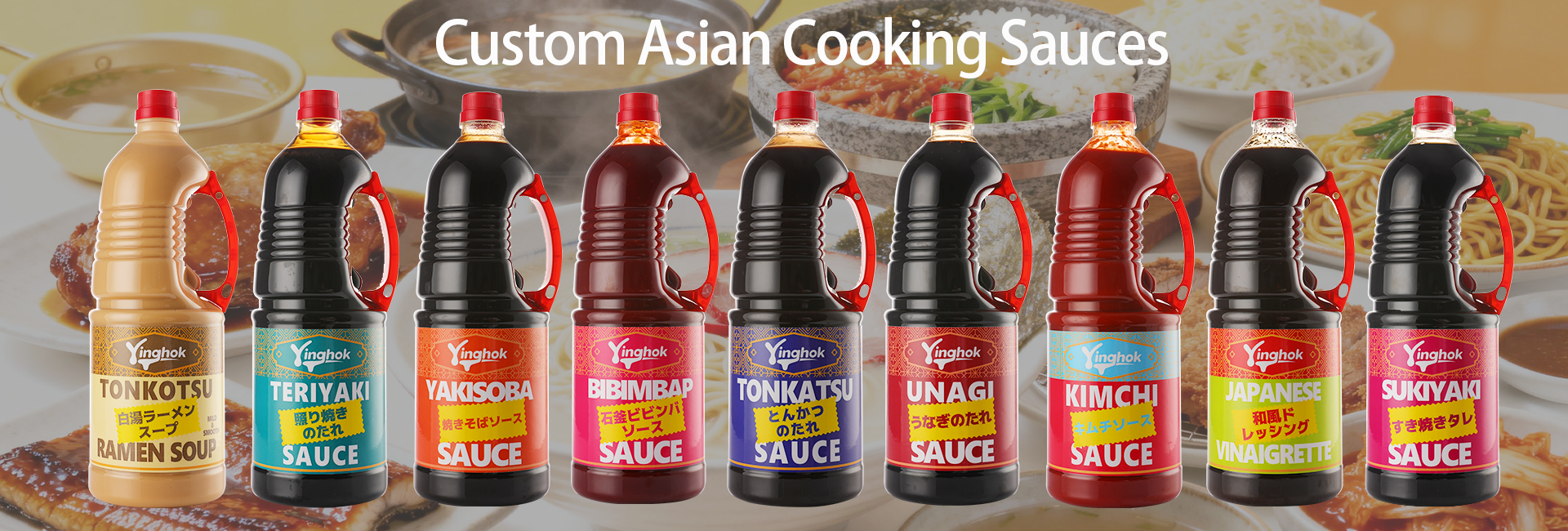
GuideCompound Seasoning OEM/Private Label: Bringing Your Own-Brand Seasonings to the World
A guide to developing compound seasonings via OEM/private label. Covers integrated production of sauces, tare, and soup bases, HALAL compliance, Japan-quality export capabilities, and key points from small-batch prototyping to mass production—written for B2B procurement professionals.
 Guide
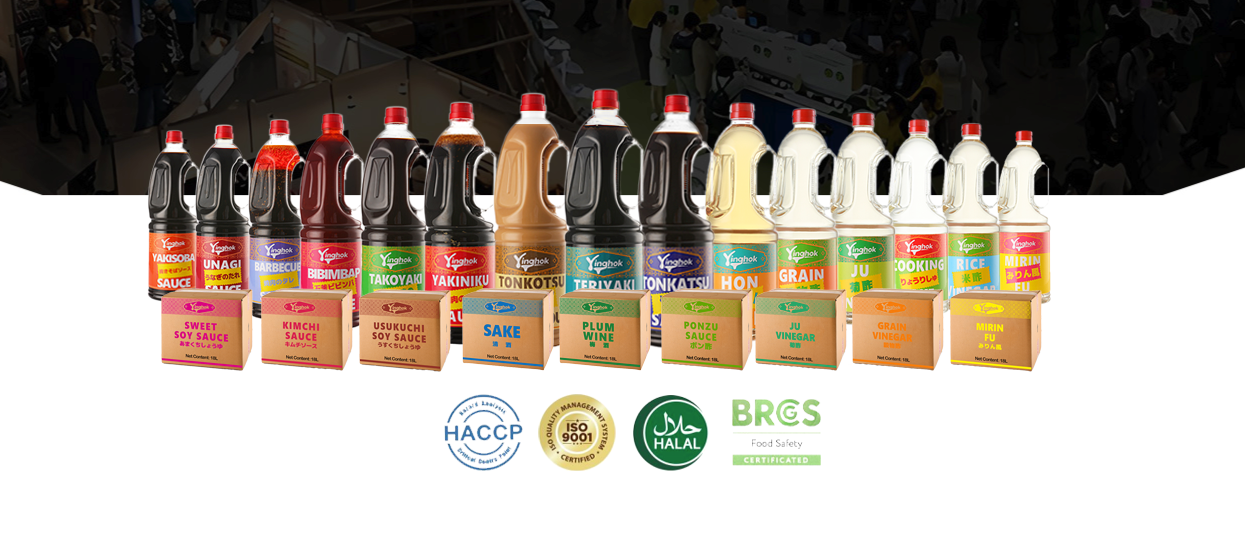
GuideNew Plant Boosts Reach from 50 to 100 Countries | Asian Seasoning OEM
A guide to Asian seasoning OEM/PB supply capabilities. Learn how Nakano Foods aims to expand from 50+ to 100 countries through its new plant—covering production capacity, certifications, and multinational flavor expertise for trading companies and product developers.
 Guide
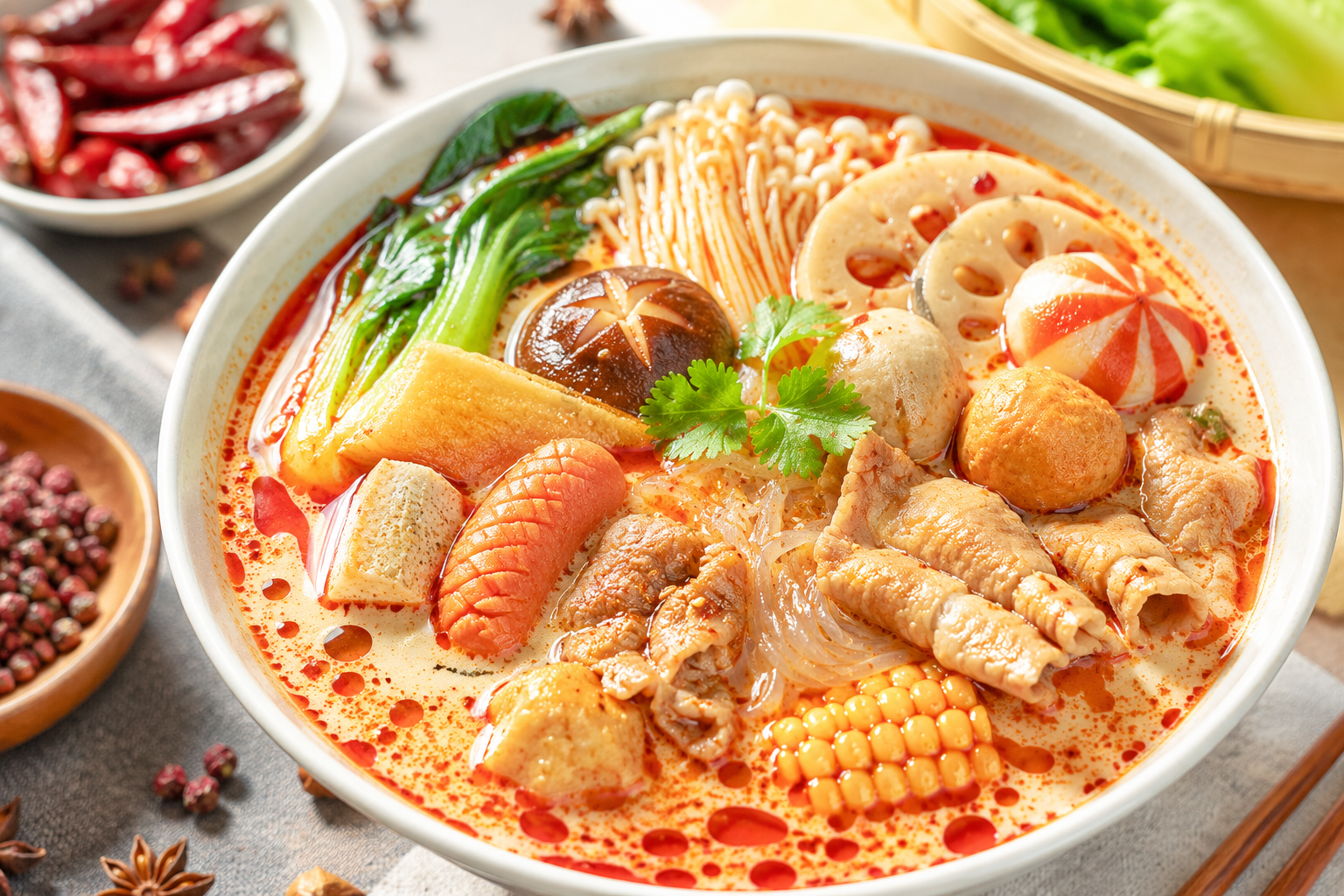
GuideStandardizing Flavor and Soup Base OEM: The Key to Private Labeling Mala Tang
The biggest hurdle in creating your own mala tang (spicy hot soup) product is flavor standardization. The key to reproducing a popular restaurant's taste at scale lies in the soup base. This article explains the essentials of OEM, private label, and retort-pouch production.