A Guide to Using Seasoning OEM to Replicate Flavor When Restaurants Expand Overseas
A Guide to Using Seasoning OEM to Replicate Flavor When Restaurants Expand Overseas
The first challenge restaurant owners and chain-headquarters product developers face when considering overseas expansion is the question of whether they can replicate "the same flavor as in Japan" abroad. When local staff do the cooking, flavor tends to vary due to differences in ingredients, water quality, and the cooking environment. This article focuses on replicating flavor during restaurant overseas expansion, outlining the concept of standardization through commercial seasoning OEM and the key points for selecting a manufacturing partner. Use it as a decision-making resource if you are grappling with how to build a foundation for overseas expansion.
Four Reasons Flavor "Changes" When Restaurants Expand Overseas
Several structural factors lie behind flavor changes at overseas locations. The first is ingredients. Even with the same product name, the origin, variety, and processing method differ by country, creating variations in flavor and color.
The second is water quality. Differences in hardness and mineral content affect the extraction of dashi in soups and the emulsification of sauces. It is not uncommon for a recipe premised on Japan's soft water to fail to turn out as intended in a hard-water region.
The third is the cooking environment. Differences in kitchen equipment—heat output, pot materials, water pressure, temperature, and humidity—all affect reproducibility. The fourth is staff skill. Cooking that depends on skilled artisans and individual expertise cannot easily be handed off to inexperienced local staff.
When these four factors overlap, you end up in a situation where "it should be the same as the flagship, but the flavor is different." The key to successfully replicating flavor during overseas expansion is minimizing these uncertain variables.
From Skill-Dependent Cooking to Standardized Seasonings
An effective way to suppress flavor variation is to standardize the core flavor components—soups, sauces, and tare. By replacing processes that rely on an artisan's intuition with fully developed commercial seasonings, you can more easily deliver the same flavor even when the location or country changes.
The Relationship Between Central Kitchens and Seasoning Standardization
Restaurant chains operating multiple locations commonly use a central kitchen to manufacture and supply seasonings in bulk. However, establishing your own central kitchen overseas requires significant capital investment and a robust hygiene management system.
An option that reduces this burden is commercial seasoning OEM outsourcing to a specialized manufacturer. By supplying pre-developed soups and sauces in packaged form, local locations can approach a finished product through simple steps such as heating or tossing.
Three Benefits of Standardization
The advantages of standardization go beyond flavor uniformity. First, simplifying the cooking process lowers staff training costs. Second, recipes are less likely to leak externally, protecting brand assets. Third, bulk procurement of ingredients stabilizes both quality and cost.
Why OEM Becomes the Foundation for Multi-Location and Overseas Expansion
Commercial seasoning OEM functions not merely as contract manufacturing but as core infrastructure for overseas expansion. Once you establish the flavor design with a manufacturer, that formulation can be supplied at identical quality to all locations and sites.
Balancing Flavor Reproducibility and Supply
What matters in overseas expansion is balancing flavor reproducibility with stable supply. No matter how well you standardize the flavor, store operations cannot function if the required volume does not reach the local site. Selecting a manufacturer equipped with both production capacity and an export system is a prerequisite.
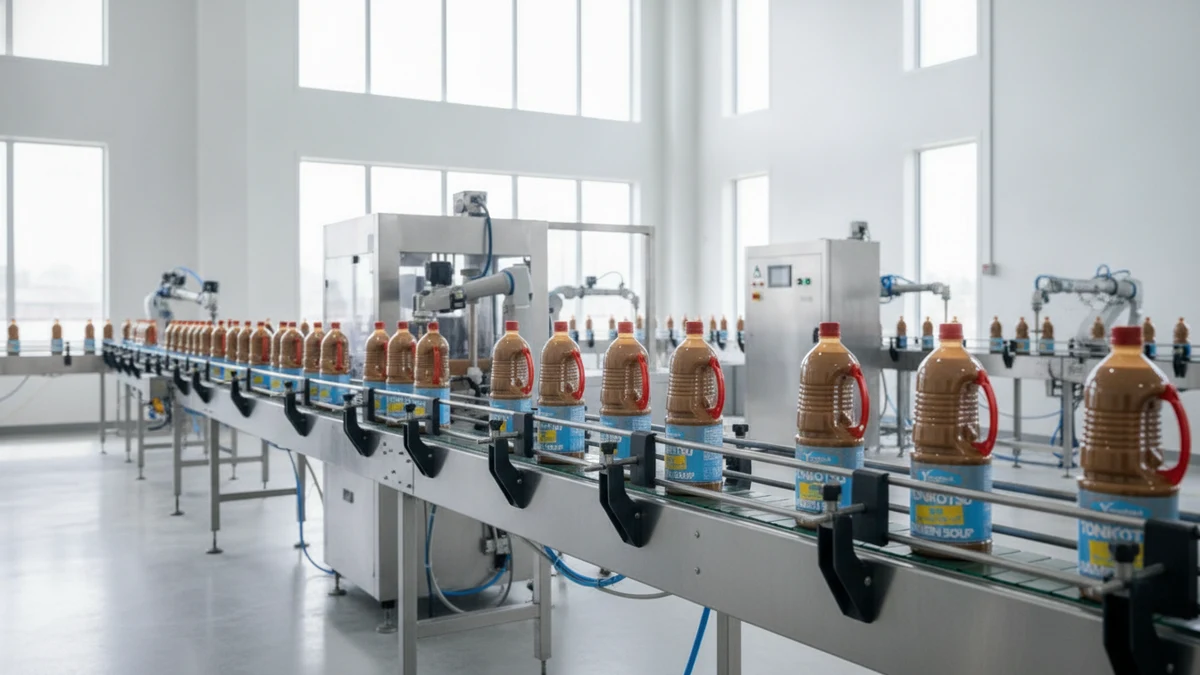
For reference, Nakano Foods (Dalian) Co., Ltd., which operates YINGHOK, runs 5 production sites within China, including its Foshan plant and its Dalian Phase 1 and Phase 2 plants, with annual production capacity exceeding 200,000 tons. It operates 12 automated lines and has a track record of supplying more than 10,000 companies across 50+ countries.
Ramen Soup OEM and Overseas Expansion
Ramen soup OEM is a field particularly well suited to overseas expansion. By finishing diverse bases—tonkotsu, chicken paitan, miso, soy sauce—at the plant and supplying them in 1.8L PET containers, gallon cans, or large commercial pouches, overseas locations can consistently deliver the flagship's flavor.
Partner Selection Criteria to Verify for Overseas Expansion
Selecting an OEM partner determines the success or failure of overseas expansion. Comparing candidates against the following criteria improves the precision of your decision.
Quality Certifications and Export Support
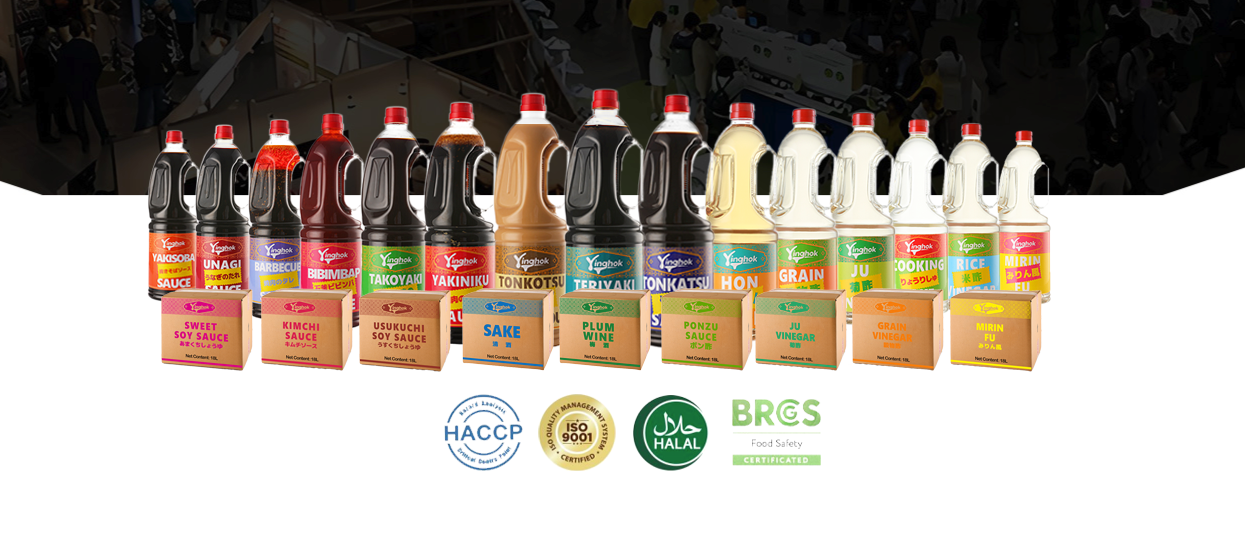
When supplying food overseas, compliance with the standards of the destination country is required. YINGHOK holds six certifications: HACCP, ISO 9001, ISO 22000, BRCGS, FDA, and HALAL. Its HALAL compliance meets the standards of BPJPH (Indonesia) and JAKIM (Malaysia), allowing it to address demand from inbound tourism to Japan as well as expansion into Southeast Asia.
The presence of certifications is a critical indicator that guarantees not only flavor but also safety and export eligibility. Confirming before signing a contract that the partner holds the certifications required for your target market is indispensable.
Development Capability and Flexible Lot Support
In flavor co-development, the question is how far an existing recipe can be replicated and improved. With ODM/PB support that lets you outsource everything from formulation development to packaging, you can streamline the creation of a brand's distinctive flavor. A manufacturer that can accommodate small-lot prototyping also makes flavor validation before mass production smooth.
The Overseas Supply System as Seen Through Track Record and Data
In partner selection, backing from track record and data serves as decision-making material. An export track record spanning 50+ countries indicates accumulated know-how in each country's customs clearance and standards compliance. Transactions with more than 10,000 companies are proof of supply experience across diverse business formats.
Furthermore, a dedicated plant for rice vinegar and liquid seasonings (20,000 m²) is scheduled to begin operations in Dalian in 2026, strengthening the supply system for liquid seasonings. Its handling of products ranging from fermented seasonings to alcoholic beverages such as sake and plum wine is also grounds for its ability to support wide-ranging product development.
In addition, Nakano Foods Japan is scheduled to open in October 2026 as a point of contact for Japanese companies. This will enable development consultations and project management in Japanese, lowering the language and communication barriers during overseas expansion.
Summary: Delivering the Same Flavor Overseas
To replicate flavor when a restaurant expands overseas, you need to address the four factors of ingredients, water quality, cooking environment, and staff skill. An effective means of doing so is standardizing soups, sauces, and seasonings—that is, leveraging commercial seasoning OEM. Beyond uniform flavor, standardization also contributes to reduced training costs and brand protection.
Evaluate a partner against the criteria of development capability, export track record, quality certifications, production capacity, lot flexibility, and long-term support. As a first step toward building the foundation to deliver the same flavor overseas, we recommend confirming the flavor with a sample first.
Request a free sample
Try our products with a free sample. Feel free to get in touch.
Request a sampleRelated Articles
 Guide
GuideCompound Seasoning OEM/Private Label: Bringing Your Own-Brand Seasonings to the World
A guide to developing compound seasonings via OEM/private label. Covers integrated production of sauces, tare, and soup bases, HALAL compliance, Japan-quality export capabilities, and key points from small-batch prototyping to mass production—written for B2B procurement professionals.
 Guide
GuideNew Plant Boosts Reach from 50 to 100 Countries | Asian Seasoning OEM
A guide to Asian seasoning OEM/PB supply capabilities. Learn how Nakano Foods aims to expand from 50+ to 100 countries through its new plant—covering production capacity, certifications, and multinational flavor expertise for trading companies and product developers.
 Guide
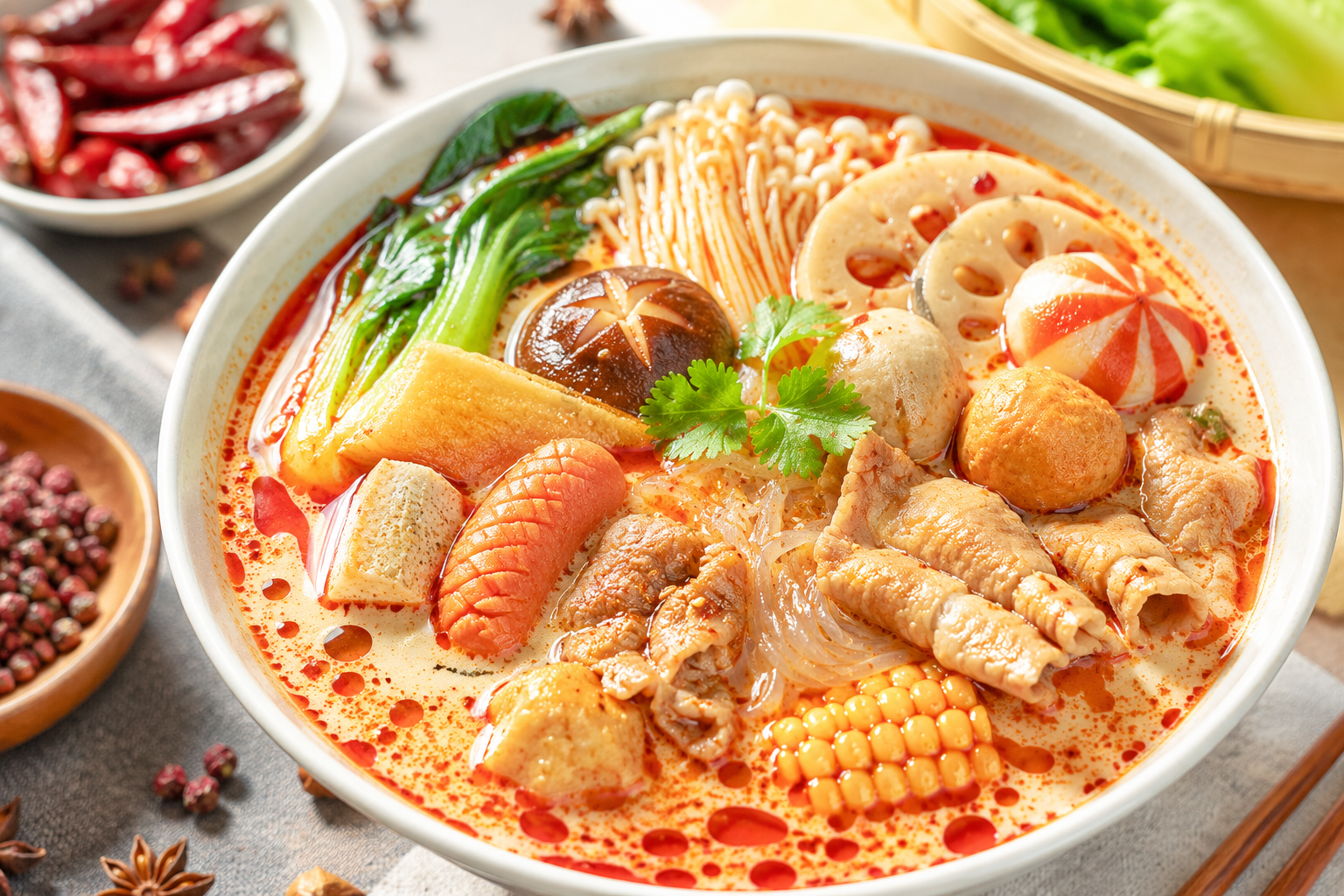
GuideStandardizing Flavor and Soup Base OEM: The Key to Private Labeling Mala Tang
The biggest hurdle in creating your own mala tang (spicy hot soup) product is flavor standardization. The key to reproducing a popular restaurant's taste at scale lies in the soup base. This article explains the essentials of OEM, private label, and retort-pouch production.