The Complete Guide to Sichuan Pepper Mala Tang Sauce OEM | For Procurement Managers
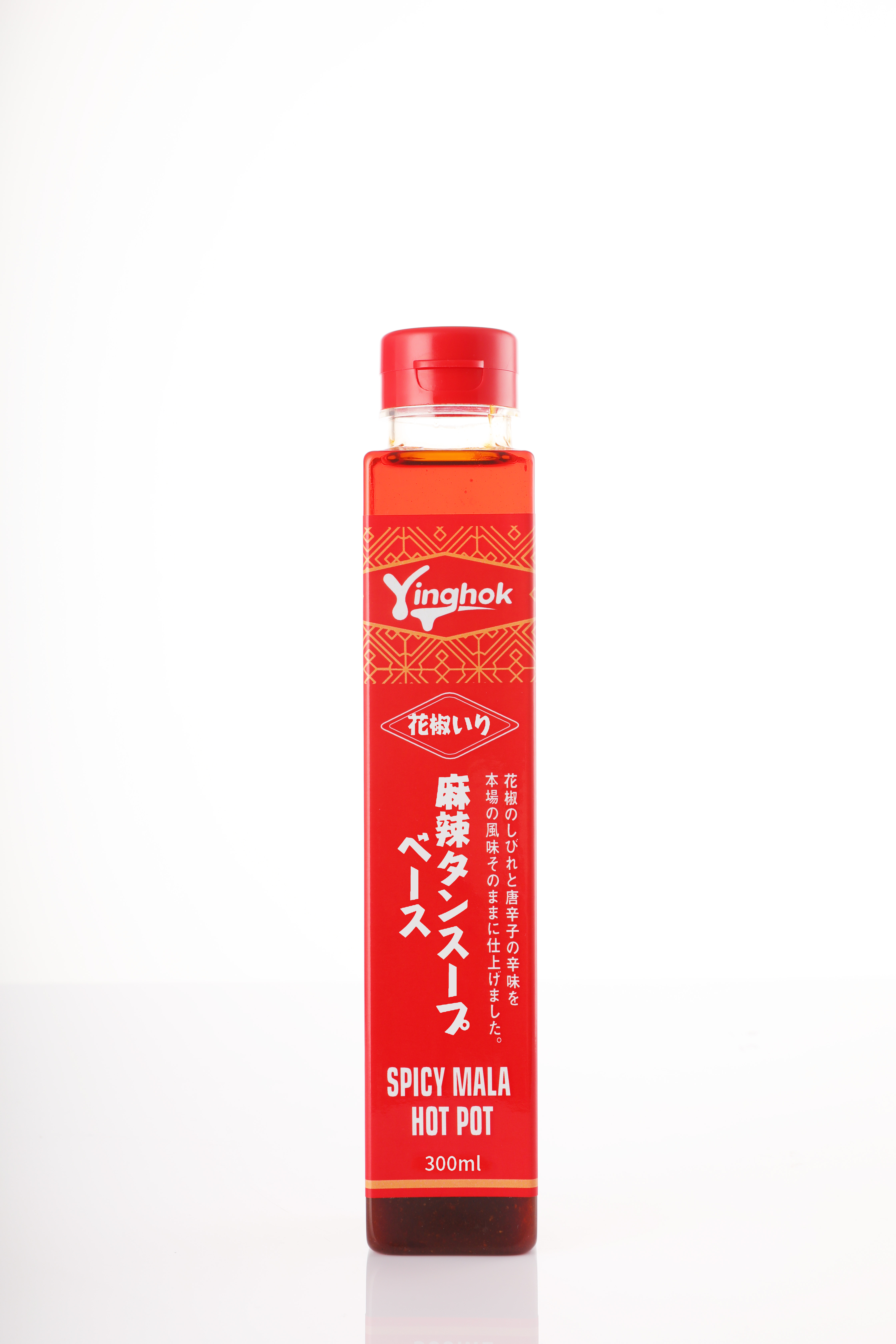
The Complete Guide to Sichuan Pepper Mala Tang Sauce OEM
Against the backdrop of the globally expanding mala tang market, we are receiving a growing number of inquiries from companies looking to launch their own private-label mala tang sauce via OEM. In particular, authentic flavor profiles built around Sichuan pepper are drawing attention as a point of differentiation.
However, OEM manufacturing of Asian seasonings involves difficult judgment calls—"Which formulation is right?", "Can supply be kept stable?", "Are the certifications sufficient?"—and many procurement managers struggle to choose a partner. This article organizes the fundamentals of mala tang sauce OEM through the selection criteria from a practical, hands-on perspective.
The Fundamentals and Market Background of Mala Tang Sauce OEM
Mala tang is a simmered soup dish originating in China, characterized by a style in which ingredients are cooked in the soup before eating. In recent years, specialty stores and takeout formats have expanded across Japan, Southeast Asia, and North America, with demand growing in both the foodservice and prepared-meal sectors.
In response to this growing demand, more food manufacturers and restaurant chains are planning their own private-label mala tang sauces. Because developing a formulation from scratch requires significant cost and time, OEM manufacturing with an experienced partner is a practical option.
The flavor design of mala tang sauce is broadly composed of three elements: the ma (numbing sensation) from Sichuan pepper, the la (heat) from chili peppers, and the aroma and richness from beef fat and spices. Balancing these three elements is precisely where an OEM manufacturer's technical expertise is put to the test.
A Detailed Look at Formulation Design Leveraging Sichuan Pepper
Sichuan pepper is at the core of mala tang sauce. Its aroma and numbing quality vary significantly depending on variety, origin, harvest timing, and freshness. Articulating which Sichuan pepper characteristics you want to reproduce before engaging a partner makes development go more smoothly.
Balancing Ma and La
The numbing sensation (ma) delivered by Sichuan pepper creates a distinctive depth when combined with the heat (la) of chili peppers. Because stronger numbing tends to divide consumer preferences, calibrating the intensity to your target market is essential. The optimal intensity differs between offerings aimed at inbound tourists to Japan and those aimed at domestic staples.
Since Sichuan pepper aroma is volatile and dissipates with heat and time, how the aroma is drawn out is also a design consideration. By fine-tuning extraction temperature and the timing of ingredient incorporation, a refreshing aroma that lingers in the finish can be reproduced.
Know-How for Reproducing Asian Flavors
Authentically reproducing Chinese, Korean, and Southeast Asian flavor profiles requires formulation know-how grounded in local food culture. Since its founding in 2009, Nakano Foods has specialized in complex Asian seasonings and has developed more than 30 flavor variations, including hotpot soup bases and ramen soup bases.
By applying this pan-Asian know-how, mala tang sauce can be designed to achieve both Sichuan pepper aroma and a subtle numbing sensation. The standard workflow begins with small-batch prototyping, proceeds through internal evaluation, and then transitions to mass production.
Criteria for Comparing and Selecting OEM Partners
When comparing OEM manufacturers, it is important to evaluate quality, supply, and operational framework comprehensively—not price alone. For Asian seasonings in particular, raw material sourcing and formulation know-how are decisive for quality, so assessing specialized expertise is essential.
The main items to verify during selection are as follows.
| Verification Item | What to Check |
|---|---|
| Certification framework | Whether international food safety and quality certifications are held |
| Production capacity | Whether large-batch mass production and stable supply are possible |
| Minimum order quantity | Whether small-batch prototyping is supported |
| Scope of service | Whether everything from formulation development to packaging can be handled under one roof |
| Language & support | Whether Japanese-language negotiation and support are available |
Nakano Foods holds all six of the above certifications (HACCP, ISO 9001, ISO 22000, BRCGS, FDA, HALAL) and maintains a robust food safety and quality control framework. Its HALAL certification is issued by BPJPH (Indonesia) and JAKIM (Malaysia), enabling it to serve inbound tourism demand as well.
In addition, packaging is available in 1.8L PET containers, gallon cans, and bulk foodservice bags (20 kg, 50 kg, etc.), covering a wide range of applications from restaurant chains to prepared-meal manufacturers. Because small-batch prototyping is also supported, engagement is possible from the planning stage.
Supply Framework and Track Record
For products sold on an ongoing basis, such as mala tang sauce, stable supply is a prerequisite for the business. Stockouts caused by raw material supply-demand fluctuations or production issues lead to lost sales opportunities.
Nakano Foods operates a total of 5 production sites, including its Foshan plant (2009), Dalian Phase 1 plant (2015, 20,000 m²), and Dalian Phase 2 plant (2023, 30,000 m²), and has built a production framework with 12 automated lines and annual capacity exceeding 200,000 tons. A rice vinegar and liquid seasoning plant (20,000 m²) in Dalian is also scheduled to begin operations in 2026.
With these multiple sites and automated lines, the company has an integrated framework that supports everything from small-batch prototyping to large-batch mass production. Even when scaling mala tang sauce to mass production, this environment makes it easier to achieve both formulation reproducibility and supply stability.
Conclusion: Toward a Successful Mala Tang Sauce OEM
In mala tang sauce OEM, the balanced design of Sichuan pepper's ma, chili's la, and aroma determines the product's competitiveness. When choosing a partner, it is important to evaluate the certification framework, production capacity, minimum order quantity, one-stop capability, and Japanese-language support comprehensively—not price alone.
We recommend first articulating the flavor profile your company is aiming for, then confirming the direction through small-batch prototyping. Repeated prototype evaluation minimizes variation after mass production begins. As your next action, consider requesting a free sample to verify the actual aroma and numbing sensation firsthand.
Request a free sample
Try our products with a free sample. Feel free to get in touch.
Request a sampleRelated Articles
 Guide
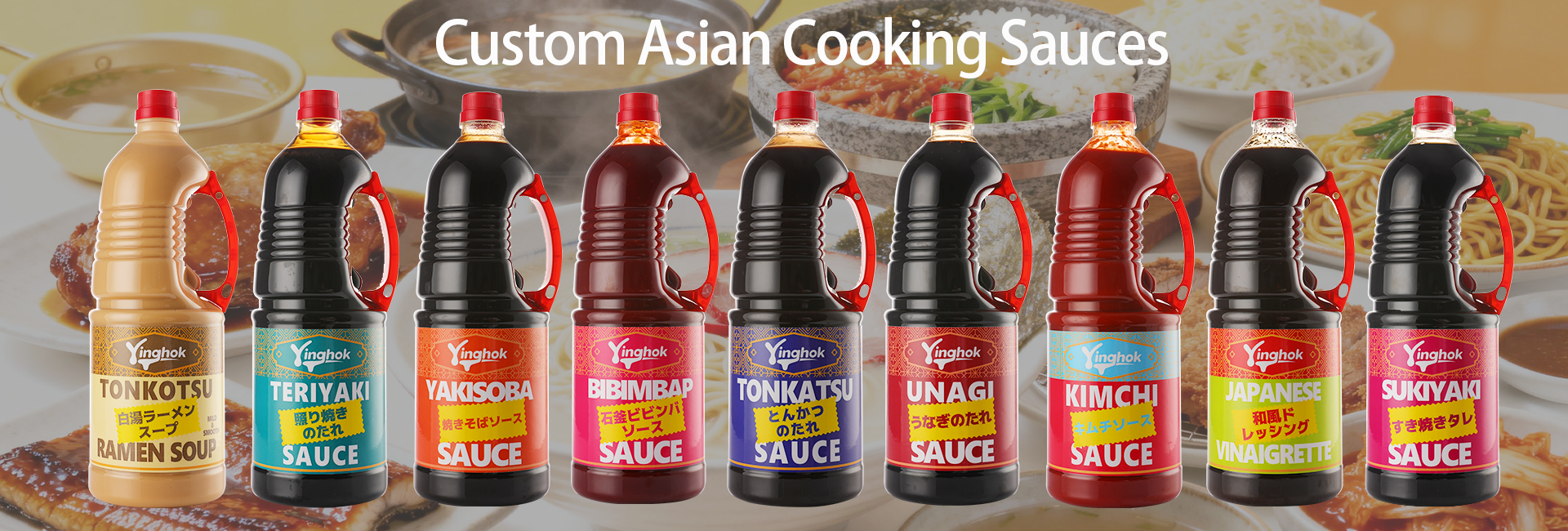
GuideCompound Seasoning OEM/Private Label: Bringing Your Own-Brand Seasonings to the World
A guide to developing compound seasonings via OEM/private label. Covers integrated production of sauces, tare, and soup bases, HALAL compliance, Japan-quality export capabilities, and key points from small-batch prototyping to mass production—written for B2B procurement professionals.
 Guide
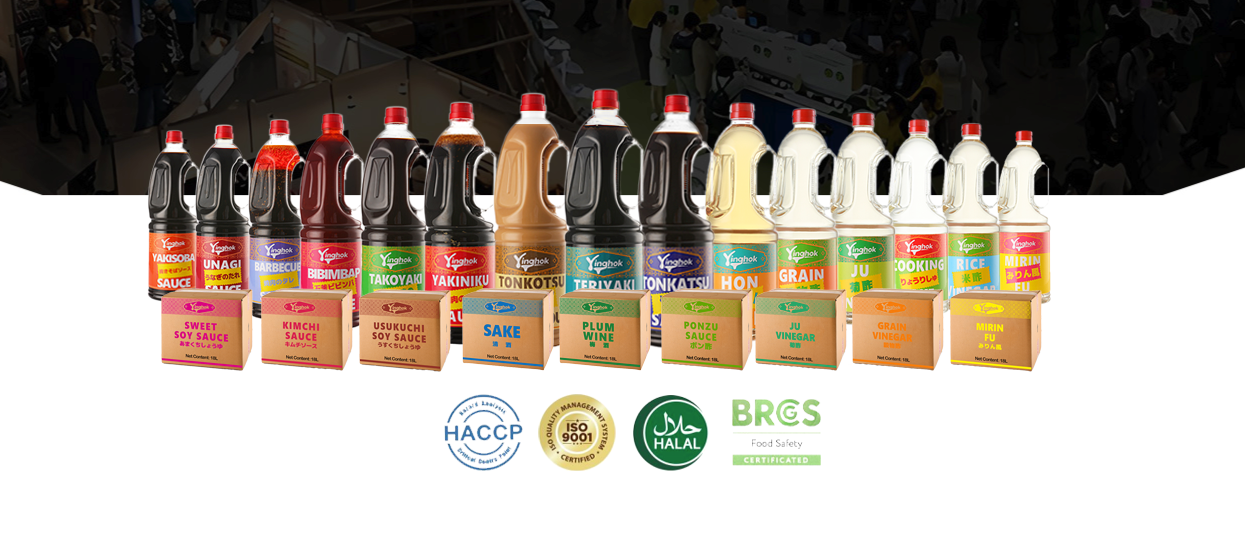
GuideNew Plant Boosts Reach from 50 to 100 Countries | Asian Seasoning OEM
A guide to Asian seasoning OEM/PB supply capabilities. Learn how Nakano Foods aims to expand from 50+ to 100 countries through its new plant—covering production capacity, certifications, and multinational flavor expertise for trading companies and product developers.
 Guide
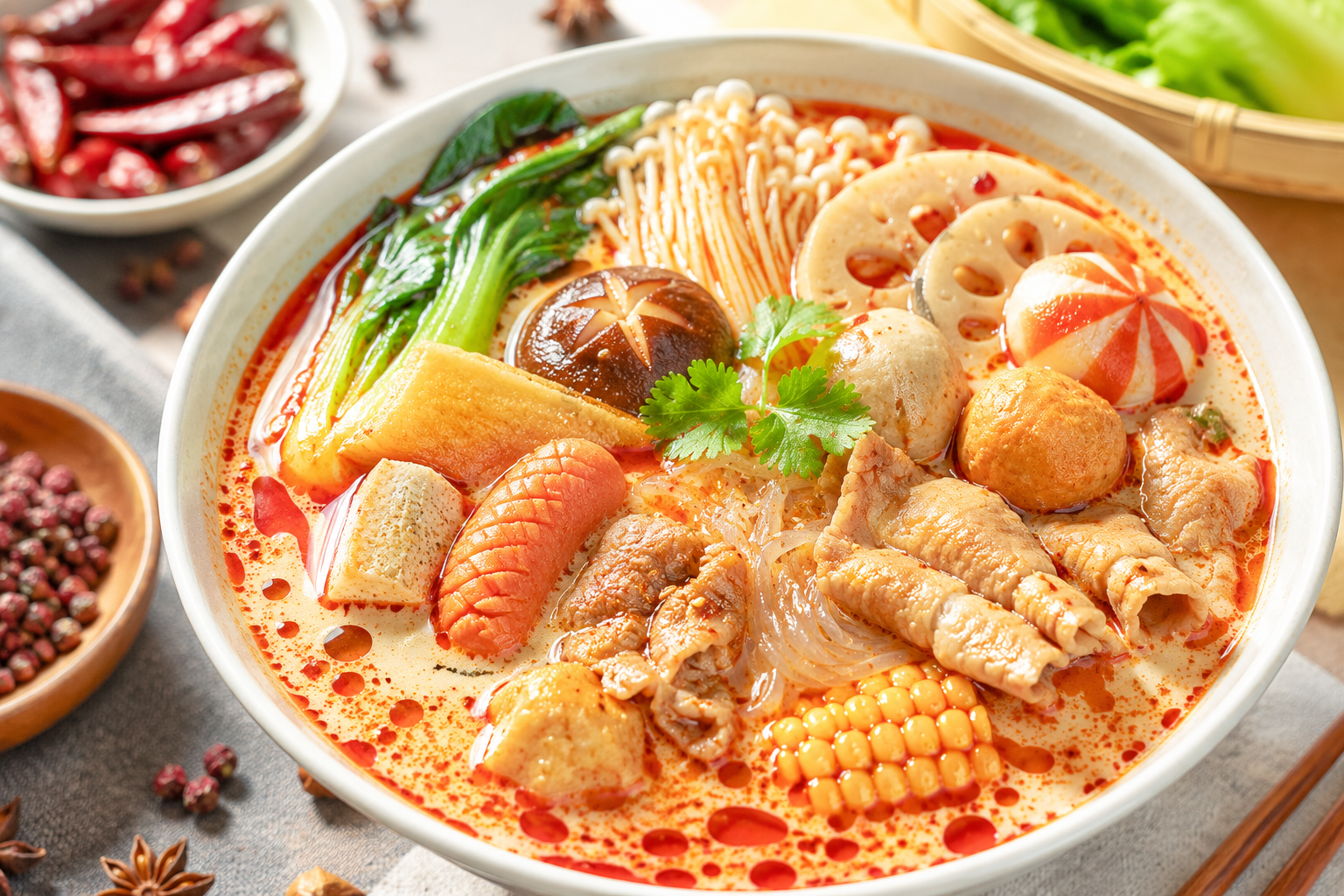
GuideStandardizing Flavor and Soup Base OEM: The Key to Private Labeling Mala Tang
The biggest hurdle in creating your own mala tang (spicy hot soup) product is flavor standardization. The key to reproducing a popular restaurant's taste at scale lies in the soup base. This article explains the essentials of OEM, private label, and retort-pouch production.