A Wholesaler's Guide to Selecting an OEM Supply Partner for Foodservice Seasonings
A Wholesaler's Guide to Selecting an OEM Supply Partner for Foodservice Seasonings
For wholesalers and sales distributors handling OEM foodservice seasonings, selecting a supply partner is a critical decision that shapes business stability. Field-level challenges are wide-ranging: supply uncertainty, quality inconsistency, growing SKU counts, and compliance with export standards. This article organizes the practical considerations for choosing an OEM manufacturer for food distribution and explains what conditions make a product easy to pitch to your customers. Our aim is to provide a perspective that avoids price-based competition and supports long-term channel growth.
The Procurement Challenges Facing Wholesalers and Distributors
Sales teams at wholesalers and distributors handling foodservice seasonings share several common challenges. The most significant is supply instability. For products serving the foodservice sector—where demand is hard to forecast—a stockout during peak season can erode customer trust.
Next is quality inconsistency. When flavor or color varies from lot to lot, problems arise when delivering to restaurant chains or food manufacturers. Consistent quality is a prerequisite for any proposal.
Growing SKU counts add further burden. Customer needs are increasingly fragmented—ramen soups, hot pot soups, various sauces, sushi seasonings, and more. Sourcing across multiple manufacturers inflates management costs and inventory risk.
Furthermore, when overseas channels are in scope, compliance with export standards becomes a barrier. If you cannot meet the certification requirements of each destination country, negotiations cannot move forward. These challenges can be significantly reduced through the right choice of supply partner.
Supply Capacity and Certifications That Matter in a Proposal
In proposals to restaurant chains and food manufacturers, the ultimate questions are "Can supply be delivered reliably?" and "Can safety be demonstrated?" These two points form the foundation for wholesalers and distributors to win over their customers.
A Production System That Supports Stable Supply
Supply stability can be evaluated by production capacity and the number of sites. A manufacturer with only a single plant has limited fallback options in the event of a disaster or equipment failure. Manufacturers with multiple sites hold an advantage from a risk-diversification standpoint.
For reference, Nakano Foods (Dalian) Co., Ltd. operates 5 production sites across China—including its Foshan plant, Dalian Phase 1 and Phase 2 plants, and a fermented-products facility—with an annual production capacity exceeding 200,000 tons. With 12 automated lines, the company combines stable large-lot supply with uniform quality.
Certifications as Proof Points in Your Proposals
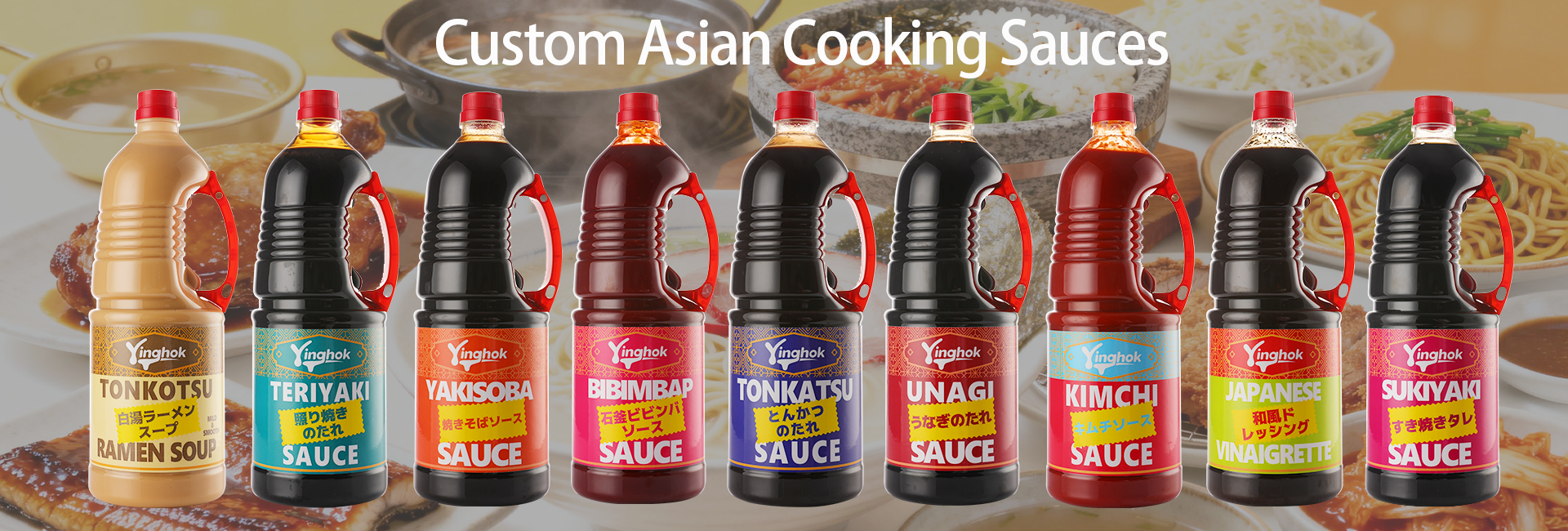
Certifications provide objective evidence of safety for your customers. The more certifications you can list in a proposal, the more smoothly negotiations proceed. The key certifications wholesalers and distributors should verify are as follows.
- HACCP (Hazard Analysis and Critical Control Points)
- ISO 9001 (Quality Management)
- ISO 22000 (Food Safety Management)
- BRCGS (Brand Reputation Compliance Global Standards)
- FDA (U.S. Food and Drug Administration)
- HALAL (Islamic law compliance; issued by BPJPH / JAKIM)
A manufacturer that holds all six of these certifications can serve a broad range of domestic and international customers. In particular, BRCGS and FDA are strengths for North American and European markets, while HALAL is a key advantage in proposals for Southeast Asia and inbound tourism in Japan.
Practical Points for Choosing an OEM Manufacturer
After confirming supply capacity and certifications, the next things wholesalers and distributors should examine are development capability and category breadth. These determine how much flexibility you have in proposals to your customers.
OEM/ODM Development Capability
A manufacturer that supports ODM (development from concept and formulation) in addition to OEM (contract manufacturing) can fully support a customer's launch of a private label (PB). When everything from formulation development to packaging can be outsourced in one package, wholesalers and distributors can propose new products without maintaining their own development functions.
Small-lot prototyping support is also important. Being able to verify flavor with samples before full-scale supply accelerates agreement with your customers. Manufacturers that flexibly handle everything from prototypes to large lots are dependable partners at every stage of negotiation.
Breadth of Category Proposals
A manufacturer that can handle multiple categories in one package makes cross-selling easier. Consolidating your suppliers also reduces management workload.
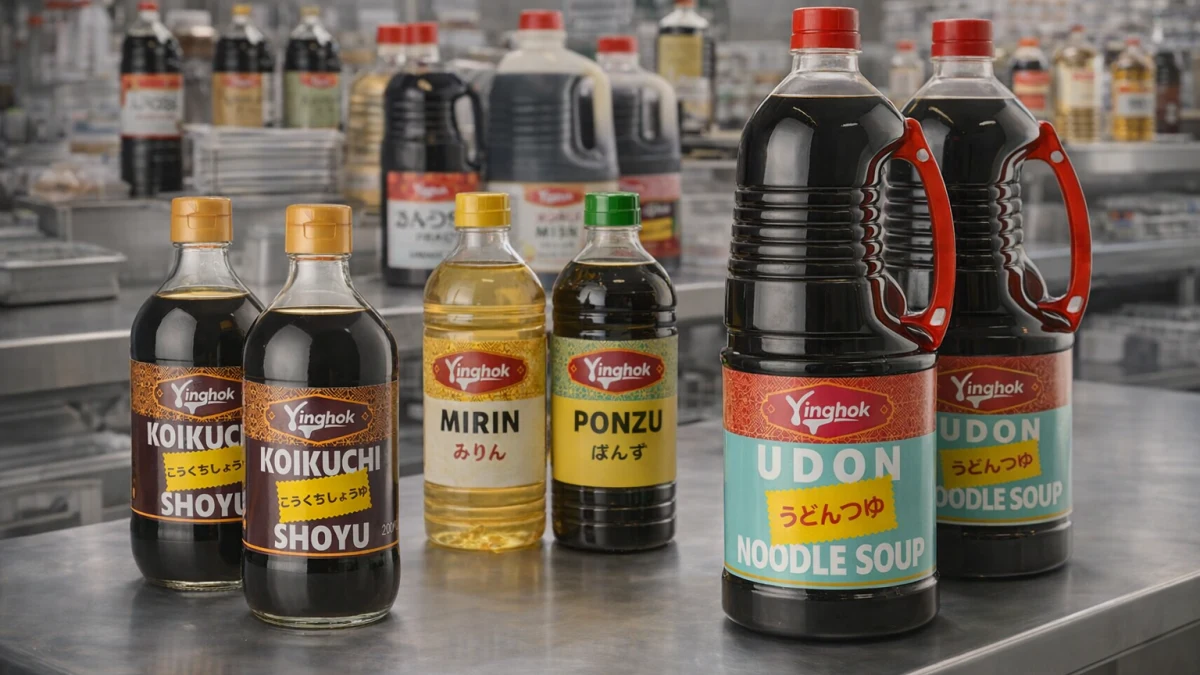
For example, Nakano Foods offers 8 categories—including ramen soups (30+ flavors), hot pot soups, various sauces, sushi seasonings, dressings and tare sauces, fermented seasonings, and alcoholic beverages such as sake and plum wine. The company excels at authentically reproducing Chinese, Korean, and Southeast Asian flavors, and also supplies sushi seasonings for Japanese restaurants overseas.
Packaging and Compliance with Overseas Standards
Packaging options also affect the breadth of your proposals. The ability to accommodate a wide range of delivery formats—1.8L PET containers, gallon cans, and 20kg/50kg foodservice bulk bags—means the manufacturer can serve customers of any business type, from restaurant chains to food manufacturers.
If you are targeting overseas channels, experience with country-specific standards is the deciding factor. The more extensive a manufacturer's supply track record, the more familiar it is with the requirements of each destination country, helping reduce negotiation risk.
Selecting with Overseas Channels and Long-Term Collaboration in Mind
As the domestic market matures, overseas channels and inbound tourism demand represent growth opportunities for wholesalers and distributors. This is where a manufacturer's overseas experience comes into play.
Since its founding in 2009, Nakano Foods has supplied 50+ countries—centered on Japan, North America, Europe, and Southeast Asia—and serves 10,000+ companies. This track record reflects accumulated experience in meeting the standards and logistics of various countries. Even for new overseas proposals, you can consult with the manufacturer based on its past cases.
HALAL compliance pays off in both exports to Southeast Asia and inbound tourism in Japan. Being able to propose HALAL-certified seasonings broadens the range of establishments you can serve and increases your value as a distributor.
When looking toward long-term collaboration, it is important to choose a manufacturer that comprehensively combines supply capacity, certifications, development capability, and support systems. A supplier chosen on price alone can ultimately inflate costs through stockouts and quality issues. A stable partner builds trust with your customers and becomes the foundation for channel growth.
Conclusion: Choose a Supply Partner That's Easy to Pitch
In selecting an OEM supply partner for foodservice seasonings, it is important to base your decision on "supply stability, certifications, development capability, category breadth, and overseas experience"—not on price. Manufacturers that combine these strengths make it easy for wholesalers and distributors to pitch to their customers and directly support long-term channel growth.
When making your selection, always verify the number of production sites and annual capacity, the status of the six certifications (HACCP, ISO 9001, ISO 22000, BRCGS, FDA, HALAL), OEM/ODM capability, and flexibility from small to large lots. We recommend first verifying quality with samples and assessing whether you can confidently pitch the product to your own customers.
Request a free sample
Try our products with a free sample. Feel free to get in touch.
Request a sampleRelated Articles
 Guide
GuideCompound Seasoning OEM/Private Label: Bringing Your Own-Brand Seasonings to the World
A guide to developing compound seasonings via OEM/private label. Covers integrated production of sauces, tare, and soup bases, HALAL compliance, Japan-quality export capabilities, and key points from small-batch prototyping to mass production—written for B2B procurement professionals.
 Guide
GuideNew Plant Boosts Reach from 50 to 100 Countries | Asian Seasoning OEM
A guide to Asian seasoning OEM/PB supply capabilities. Learn how Nakano Foods aims to expand from 50+ to 100 countries through its new plant—covering production capacity, certifications, and multinational flavor expertise for trading companies and product developers.
 Guide
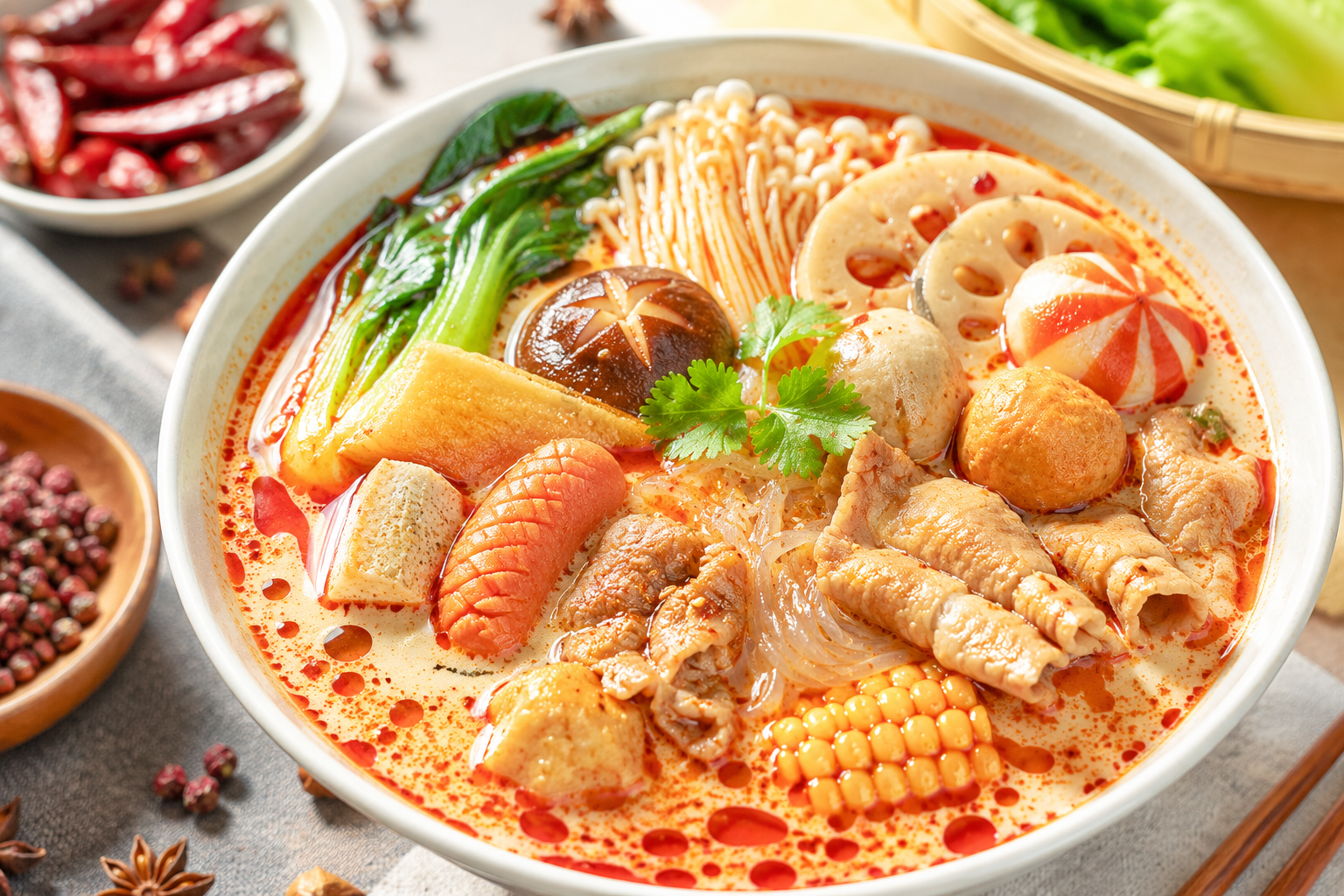
GuideStandardizing Flavor and Soup Base OEM: The Key to Private Labeling Mala Tang
The biggest hurdle in creating your own mala tang (spicy hot soup) product is flavor standardization. The key to reproducing a popular restaurant's taste at scale lies in the soup base. This article explains the essentials of OEM, private label, and retort-pouch production.