Seasoning OEM & Private Label: A Menu-First Development Guide
Seasoning OEM & Private Label: A Menu-First Development Guide
In the product development and procurement teams of restaurant chains, prepared-food manufacturers, and catering companies, launching a seasoning OEM or private label project often fails to progress as planned. Products that perform well in prototyping frequently stumble at mass production or when deployed on the floor. In most cases, the cause is judging on "flavor and price" alone, without translating actual usage into the design. This article explains how to approach development and the points to verify, through the lens of designing foodservice sauces "from the menu."
Think from the "Menu," Not the "Sauce"
When considering a seasoning OEM or private label, the first thing to keep in mind is the starting point: "which menu item will it be used for?" Rather than fixing the sauce formulation first, work backward from the finished dish and the cooking process. This sequence determines whether the product will actually be usable on the floor.
Behind this is the labor shortage and prep burden that foodservice and prepared-food operations face. A single versatile sweet-savory sauce can extend across teriyaki, rice bowls, and stir-fries, and even into marinade for fried chicken. Consolidating flavor creation into one product reduces reliance on individual skill and curbs flavor variation.
The secondary benefits are also significant. Fewer seasoning types lighten the management of purchasing items, inventory, and ordering. Flavor training for new staff becomes simpler, stabilizing operations as a whole. "Designing from the menu" is a mindset that encompasses this reduction of on-site burdens.
The 6 Things Professional Manufacturers Verify First
When you consult a professional manufacturer about developing a foodservice sauce, they will not jump straight into formulation. They first align on the prerequisites of how it will be used. Gaps here lead to more rework in later stages.
- Menu item and cooking process: Which dish, and in which process—grilling, simmering, tossing, etc.
- On-site operation: Used as-is or diluted, and how much is used per serving.
- Target cost: What cost is acceptable per serving and per volume.
- Volume, storage conditions, and shelf life: Ambient or refrigerated, handling after opening, and required shelf life.
- Labeling, allergens, and certifications: Ingredient labeling, allergen compliance, and required certifications such as HALAL.
- Reproducibility at scale: Whether the prototype flavor can be stably reproduced in mass production.
These 6 points form the foundation that determines whether a product is viable at all, before any question of flavor quality. The clearer the menu and usage, the higher the precision of prototyping and the less rework.
The Development Workflow: From Interview to Mass Production
Actual development proceeds in stages. By confirming details at each step, the product is refined into one that works on the floor.
The first step is the interview. Based on the 6 points from the previous section, we align on the menu, usage, and goals. Next comes prototyping. We handle both cases: reproducing the flavor of an existing product, and designing an original from scratch.
Once a prototype is ready, we move to on-site testing. It is used in the actual cooking process to verify flavor, workability, and usage volume. If there are no issues, we proceed to specification and labeling review, preparing ingredient labeling and allergen information. Finally comes mass production. We stabilize the process so the prototype flavor can be reliably reproduced, then move into full production.
What Nakano Foods (YINGHOK) Can Do
The value of choosing a professional manufacturer lies in a structure that can support this entire flow seamlessly. Here is an overview of what YINGHOK can offer.
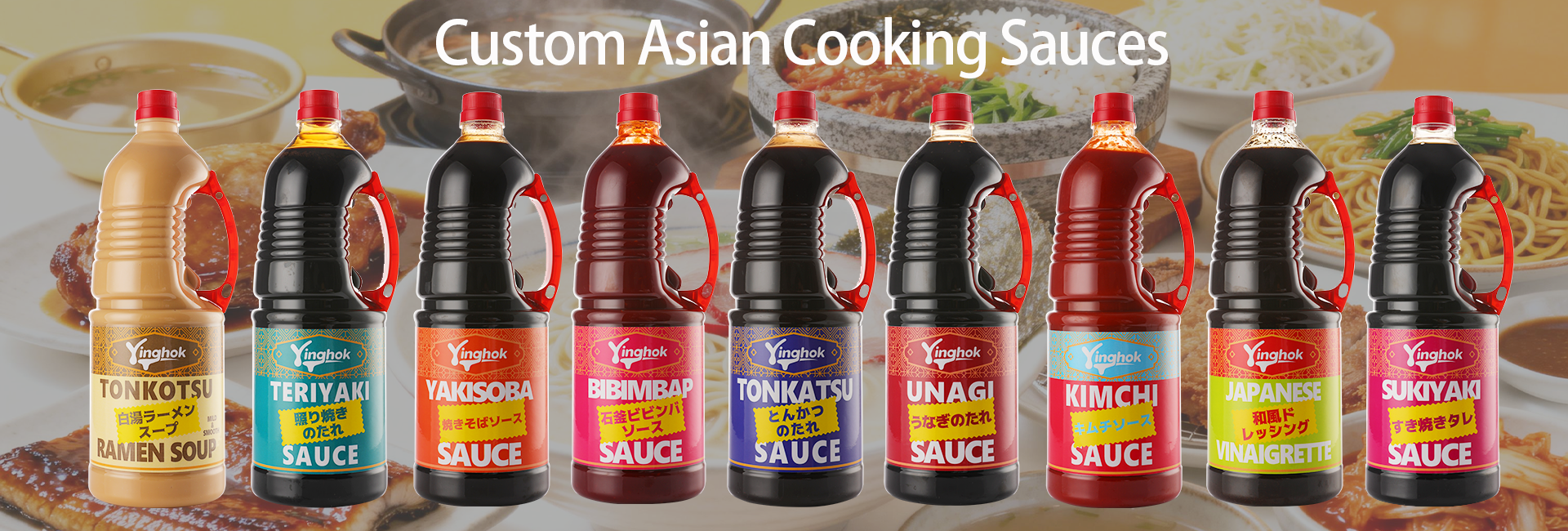
- Integrated in-house production of Japanese, Chinese, Korean, and Southeast Asian sauces, dressings, and soups
- End-to-end support from menu proposals to OEM and private label development
- Support for prototyping and launch from small lots
- Volumes from small pouches to 1.8L bottles and large foodservice bags are negotiable
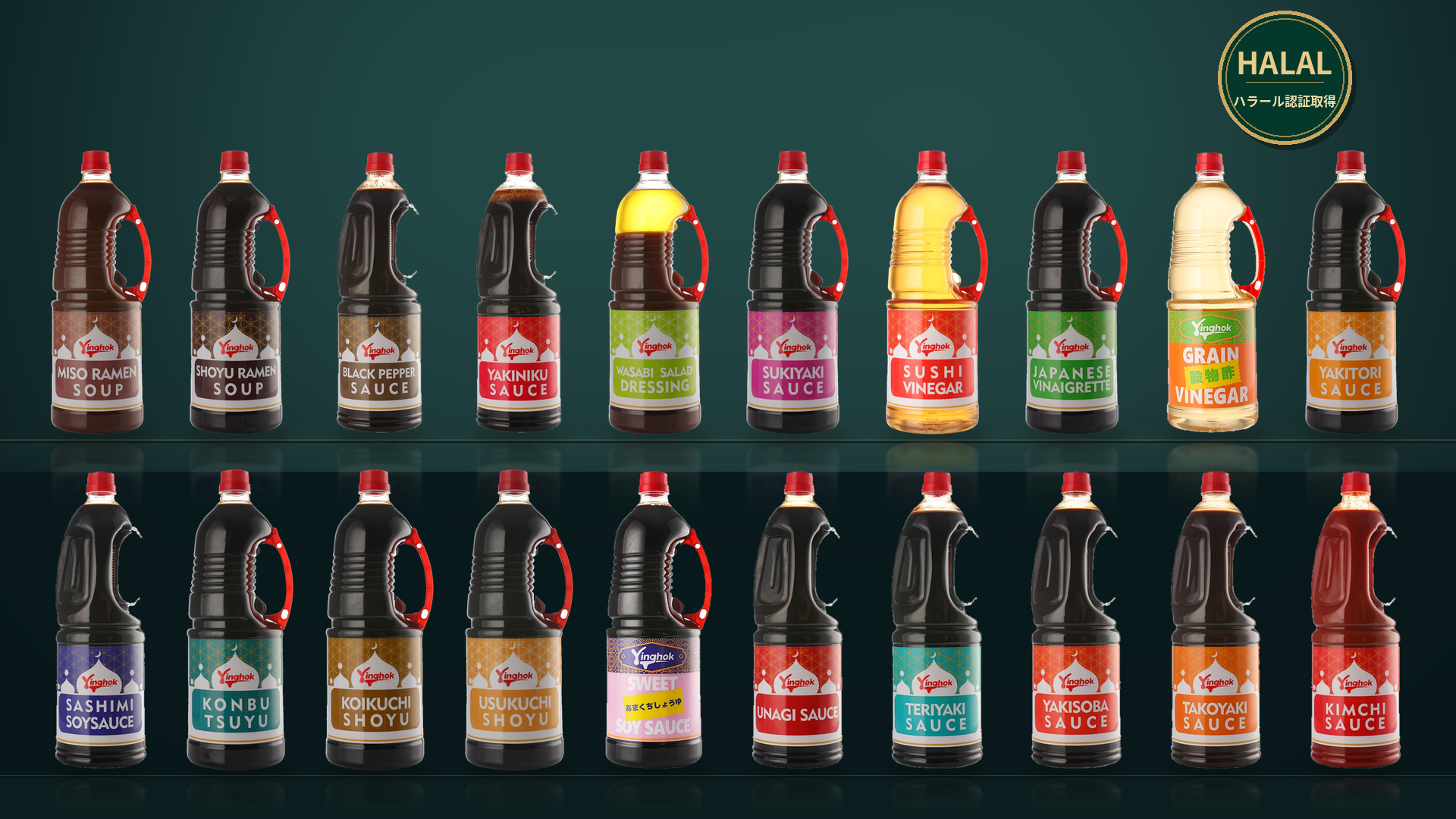
- Compliance with HACCP, ISO 9001, ISO 22000, BRCGS, FDA, and HALAL certifications
- Quality control grounded in a track record of supply to 50+ countries
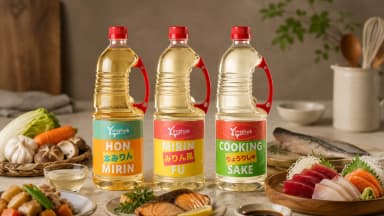
With strengths in flavor creation across Asian countries, we can address a wide range of needs, from reproducing existing menu items to proposing new flavor profiles. HALAL compliance can also be leveraged to prepare for inbound tourism demand.
Conclusion: Start from Your Menu and Your Challenges
Seasoning OEM and private label are not decided on flavor and price alone. Designing with the starting point of which menu item, who uses it, and how determines the success of commercialization. Consolidating foodservice sauces into a single product can lighten the burdens of prep, inventory, and training.
By organizing the 6 prerequisites before development and moving to mass production after small-lot prototyping and on-site testing, you can refine a product that works on the floor. Start by telling us about your current menu and your challenges. We also welcome inquiries about free samples.
Request a free sample
Try our products with a free sample. Feel free to get in touch.
Request a sampleRelated Articles
 Guide
Key Points of Halal Seasoning OEM | Formulation Design That Preserves Japanese Flavor
A guide to the key points of reproducing Japanese flavor through halal seasoning OEM. We cover alcohol-free formulation design, ingredient verification through manufacturing control and certification, foodservice-grade sauces and tare, and applications for export and inbound tourism.
 Guide
How to Choose a Sauce & Marinade OEM Manufacturer | 5 Criteria for Selecting a Private Label Partner
A guide to choosing a sauce and marinade OEM manufacturer based on five decision criteria. For procurement professionals, we outline how to select the right private label (PB) partner without missteps—covering flavor design capability, product range, volume and packaging, certifications, and account management.
 Guide
How to Develop a Teriyaki Sauce OEM | An Application-Based Design Guide
A guide for private label managers considering teriyaki sauce OEM, covering application-based design, flavor profiling, volume and packaging, and halal compliance. We explain the approach to accelerating prototyping—from foodservice to retail.