Ramen Soup OEM Selection Guide | Multi-Variety, Mass Production & Export Readiness
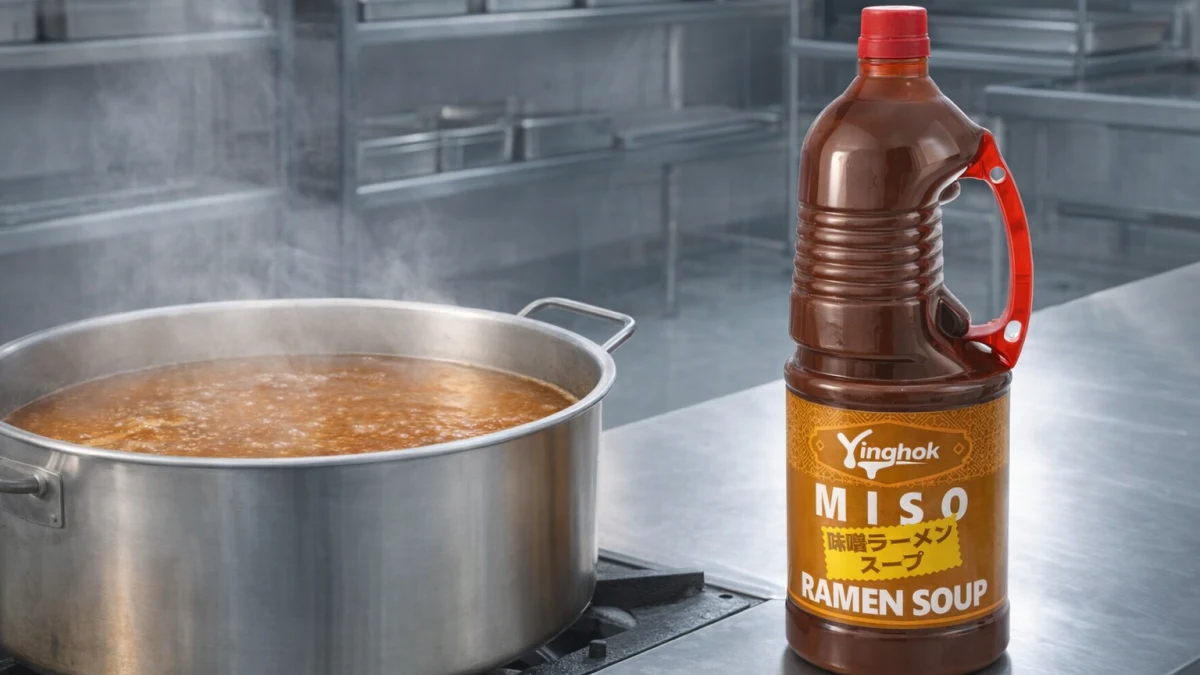
Ramen Soup OEM Selection Guide | Key Points for Multi-Variety, Mass Production & Export Readiness
As competition intensifies in Japan's domestic ramen market and Japanese-style ramen gains popularity abroad, inquiries for "ramen soup OEM" services are on the rise. For product developers and procurement managers, identifying a contractor that can reliably supply the desired soup in large volumes is no easy task. This article is written for those considering OEM/ODM outsourcing of foodservice ramen seasonings, covering everything from the market trends driving demand to practical selection criteria. We also explain the compliance points to keep in mind when export is on the horizon.
Chapter 1: Demand Drivers for Concentrated Ramen Soup and Liquid Seasoning OEM
The ramen business has expanded from specialty shops to chains and ready-to-eat products for convenience stores and mass retailers, and the way soup is sourced has diversified accordingly. Boiling soup in large pots at each location tends to create challenges in flavor consistency, labor costs, and the speed of new store openings.
This is where OEM outsourcing of concentrated soups and liquid seasonings comes into focus. By having an external manufacturer mass-produce a finished flavor base, operators can simultaneously simplify in-store operations and achieve flavor uniformity. The more aggressively a chain pursues multi-store rollouts or overseas expansion, the greater these benefits become.
For food manufacturers and trading companies, an ODM structure that handles everything from formulation development to packaging shortens development timelines when planning a private-label ramen soup. Choosing not to bring "concentrated ramen soup production" in-house is also a sound strategy for limiting capital investment risk.
Chapter 2: Balancing Diversifying Soup Trends with Mass-Production Quality
Development Capability to Meet Diversifying Categories
Beyond the staples of tonkotsu, shoyu, miso, and shio, the variety of ramen soups—tantan, chicken paitan, shrimp, spicy and more—grows year after year. Regional and seasonal product offerings are also active, requiring an OEM partner with the development capability to reproduce a wide range of categories.
Authentic flavor design leveraging Asian fermented seasonings and spices is an area where a specialist manufacturer's expertise makes the difference. Nakano Foods (YINGHOK) has a development track record of more than 30 ramen soup flavor variations, meeting the needs of an increasingly diversified market.
Managing Batch-to-Batch Consistency at Scale
Whether a flavor achieved in prototyping can be reproduced consistently at mass-production scale is a separate challenge. Differences in raw-material lots, mixing and heating conditions, and filling-process management all affect quality consistency. Whether the partner has automated production lines and a standardized quality control system is a critical factor in selection.
Product Format Options
Foodservice ramen seasonings require packaging formats selected to match the application. For restaurant chains, 1.8L PET containers are standard, while gallon cans and 20kg or 50kg industrial bulk bags are used for large-volume applications. At the prototyping stage, it is also worth confirming whether small-batch runs are supported.
Chapter 3: How to Evaluate and Compare OEM/ODM Partners
When comparing contractors, it is important to evaluate the following practical factors comprehensively—not price alone.
- Prototyping speed and minimum order quantity: Can they keep pace with your product planning? Will they accommodate small-batch prototypes?
- Flavor reproduction accuracy and batch consistency management: How do they manage quality differences between prototype and mass production?
- Number of production lines and supply capacity: Do they have a stable supply structure that avoids stockout risk?
- Certification status: Do they hold the certifications required for domestic and international trade and export?
- Integrated proposal capability: Can they offer proposals spanning liquid seasonings and fermented seasonings?
- Long-term co-development structure: Can they support you through ongoing flavor improvements and renewals?
When export is a prerequisite, certifications are a precondition that can determine whether a deal is even possible. FDA is essential for the North American market, while HALAL (issued by BPJPH [Indonesia] and JAKIM [Malaysia]) is important for Muslim markets and inbound tourism to Japan. A manufacturer holding all of these enables product design with multi-market expansion in mind.
Chapter 4: Development and Production Structure, and Examples of Global Supply
Reliable supply in ramen soup OEM is underpinned by the scale and structure of production sites. Nakano Foods (YINGHOK) was founded in 2009 in Foshan, Guangdong Province, and today operates a multi-site structure centered on its Phase 1 plant (20,000㎡) and Phase 2 plant (30,000㎡) in Dalian, augmented by a rice vinegar and liquid seasoning plant scheduled for 2026 and a fermented-products site in Shenzhen.
With a dedicated site for fermented seasonings, the company can offer integrated proposals from the base for miso- and shoyu-style soups through to liquid seasonings. A production capacity of over 200,000 tons per year across 12 automated lines provides the foundation to balance quality uniformity at scale with stable large-volume supply.
Its supply track record spans 50+ countries and 10,000+ companies, with accumulated export experience to Japan, North America, Europe, and Southeast Asia. For planners considering "ramen soup export," this kind of global experience makes it easier to consult on shipping conditions and local compliance. For the Japanese market, Nakano Foods Japan (contact: Sugawara), scheduled to open in October 2026, will serve as the point of contact, supporting business in three languages: JA, EN, and ZH.
Summary
When selecting a ramen soup OEM partner, it is essential to compare contractors around four axes: flavor reproduction accuracy, batch-to-batch consistency at scale, reliable supply capacity, and international compliance. Development capability that meets diversifying soup trends, combined with order-size flexibility covering everything from small-batch prototypes to large-volume mass production, will make or break your product development. If overseas expansion is on your radar, confirm the status of certifications such as HACCP, ISO 9001, ISO 22000, BRCGS, FDA, and HALAL early on. As a next step, we recommend first defining your intended flavor, order size, and target markets, then beginning with a consultation on prototype samples.
Request a free sample
Try our products with a free sample. Feel free to get in touch.
Request a sampleRelated Articles
 Guide
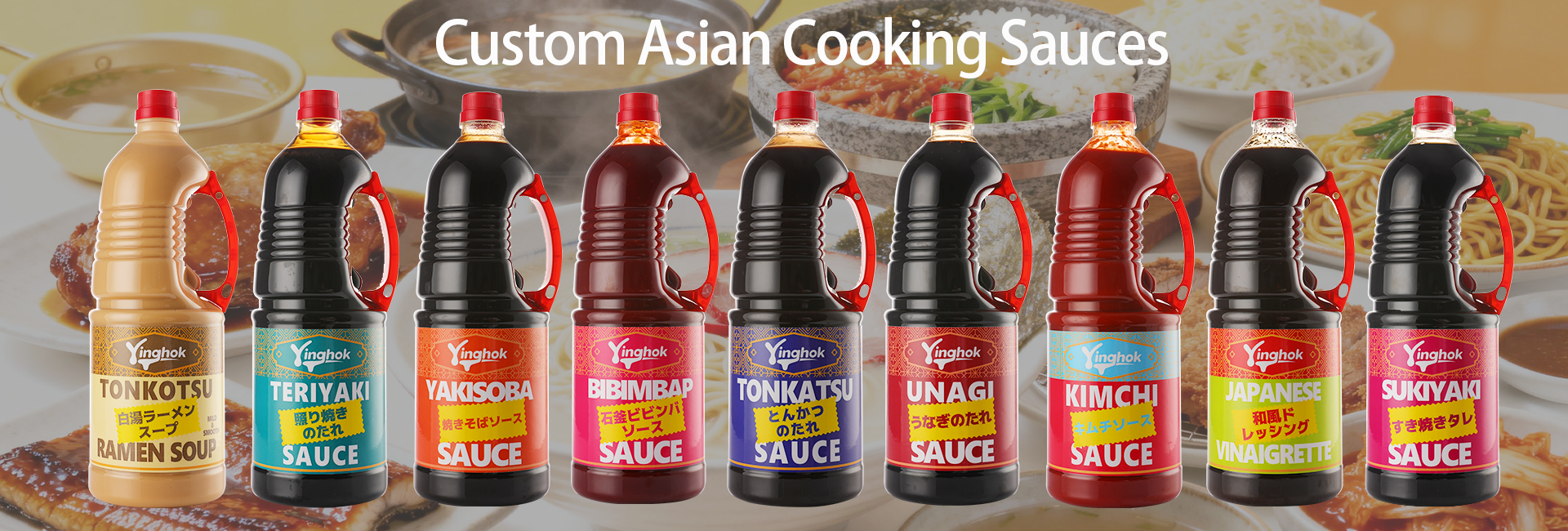
GuideCompound Seasoning OEM/Private Label: Bringing Your Own-Brand Seasonings to the World
A guide to developing compound seasonings via OEM/private label. Covers integrated production of sauces, tare, and soup bases, HALAL compliance, Japan-quality export capabilities, and key points from small-batch prototyping to mass production—written for B2B procurement professionals.
 Guide
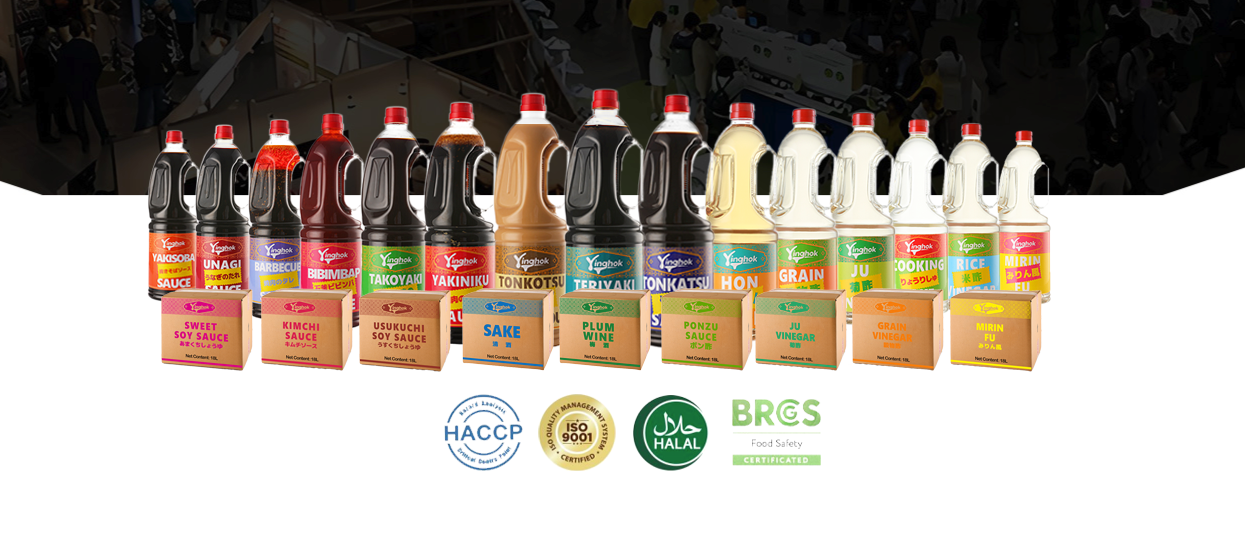
GuideNew Plant Boosts Reach from 50 to 100 Countries | Asian Seasoning OEM
A guide to Asian seasoning OEM/PB supply capabilities. Learn how Nakano Foods aims to expand from 50+ to 100 countries through its new plant—covering production capacity, certifications, and multinational flavor expertise for trading companies and product developers.
 Guide
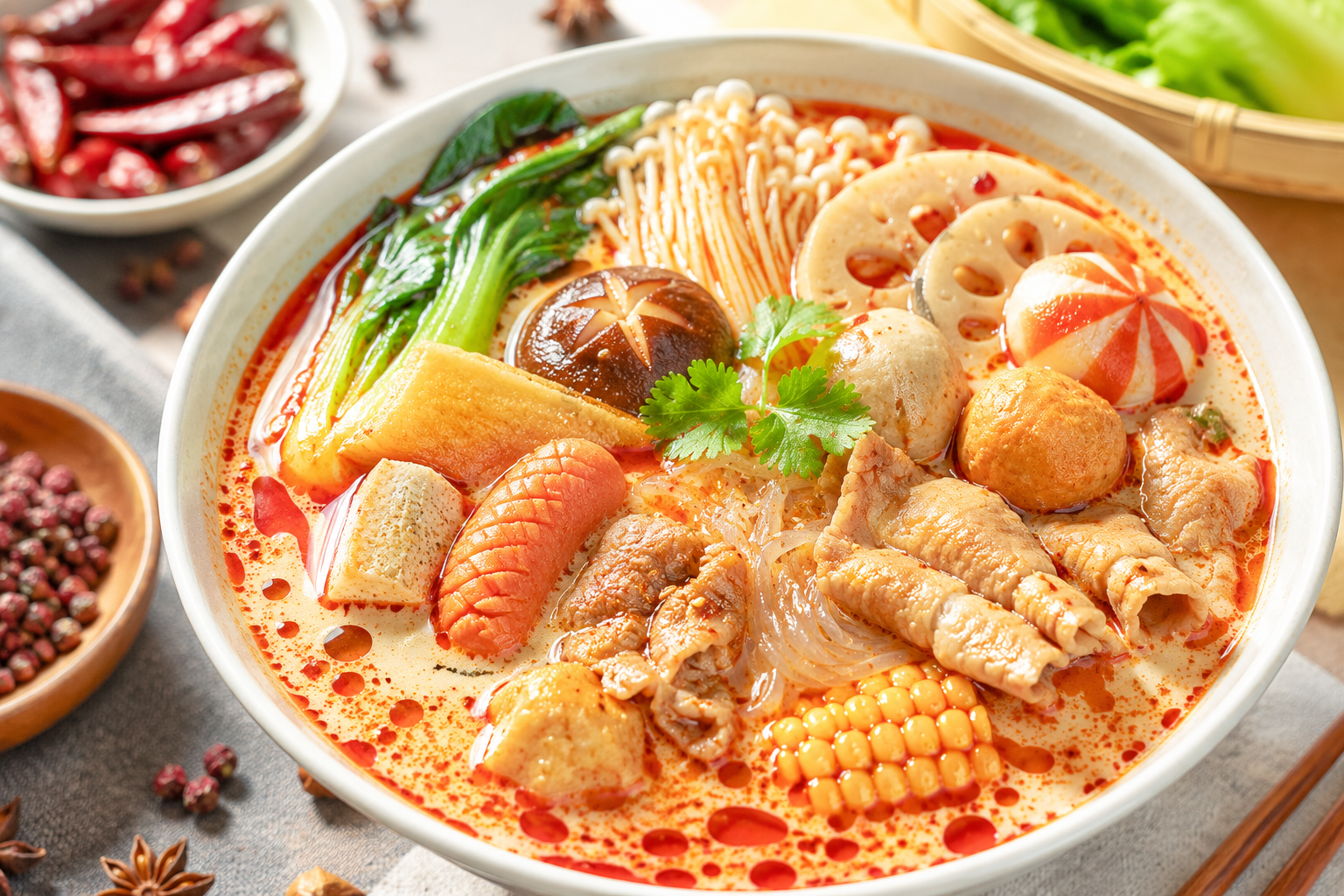
GuideStandardizing Flavor and Soup Base OEM: The Key to Private Labeling Mala Tang
The biggest hurdle in creating your own mala tang (spicy hot soup) product is flavor standardization. The key to reproducing a popular restaurant's taste at scale lies in the soup base. This article explains the essentials of OEM, private label, and retort-pouch production.