3 Barriers to Overcome When Sourcing Authentic Malatang Soup
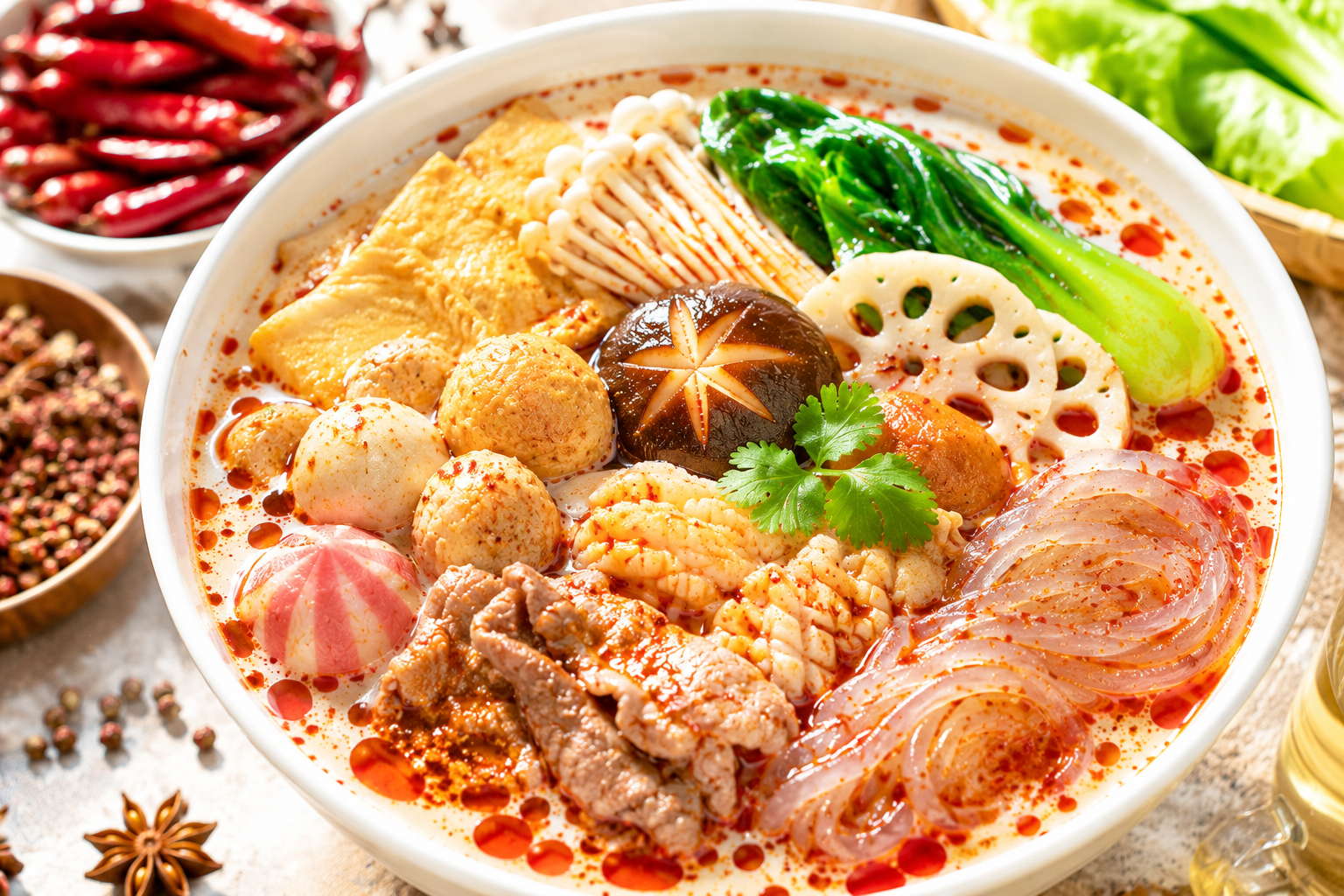
3 Barriers to Overcome When Sourcing Authentic Malatang Soup
If you want to "serve authentic malatang" or "develop a private label malatang product" in Japan, you will likely hit the same wall many businesses do once you start searching for a malatang soup supplier. Even when you search for "authentic malatang," "foodservice malatang," or "malatang OEM," finding a partner that meets every requirement proves difficult.
This article organizes the three barriers you must overcome when sourcing malatang soup and explains the practical checkpoints for selecting a supplier. Use it as reference material so that procurement managers at restaurants, food manufacturers, and trading companies can make a sourcing decision they won't regret.
The Reality Businesses Face When Sourcing Malatang Soup
Malatang is a Chinese-origin soup dish that combines the numbing heat of Sichuan pepper (huajiao/sansho) with chili peppers. In recent years, specialty shops and takeout formats have grown rapidly in Japan, driving up demand for foodservice malatang soup and malatang soup bases.
Yet finding a supplier is not easy. Domestically produced products have limits in reproducing the flavor, and off-the-shelf Chinese products often fail to meet Japanese regulations or taste preferences. As a result, restaurants and food manufacturers get caught between "authentic flavor" and "marketability in Japan."
Breaking this challenge down, the barriers to overcome can be organized into three. Let's look at each in turn.
The First Barrier: The "Root" of Authentic Flavor Lies in Chinese Origins
The appeal of authentic (zhengzong) malatang lies in the numbing heat of Sichuan pepper and the complex aroma of multiple spices layered together. This "root" of the flavor depends heavily on the origin of the ingredients and the production method.
The Numbing Heat of Sichuan Pepper Is Determined by Ingredients and Process
Sichuan pepper, the star of the numbing heat, varies greatly in aroma and quality of numbness depending on its origin and variety. The production know-how of processing multiple spices in the proper sequence and at the proper temperatures also determines the depth of flavor. Reproducing this complexity with domestic equipment alone is no easy task.
If you seek authentic flavor, a supplier that owns its own factories in China and can manage the entire process from ingredient sourcing to manufacturing has the advantage. Nakano Foods (Dalian) Co., Ltd. was founded in 2009 in Foshan, Guangdong Province, China, and manufactures Asian compound seasonings across a production structure that includes multiple factories in Dalian.
The Second Barrier: Bringing Chinese Flavor Over Unchanged Doesn't Work
Even if you can create authentic flavor, that alone will not sell in the Japanese market. Malatang made locally in China often sets its heat, numbness, oil content, and salt content stronger than the average Japanese preference.
Re-Engineering Heat, Numbness, Oil, and Salt for Japanese Consumers
To make a soup that continues to be chosen in Japan, you need the expertise to preserve the authentic framework while adjusting the levels of heat and numbness, oil content, and salt concentration to Japanese preferences. This requires not merely toning down flavor, but delicate tuning that does not compromise how the aroma rises or the richness of the broth.
This re-engineering cannot be done without the involvement of a compound seasoning manufacturer that possesses taste data and formulation development know-how. Nakano Foods supports OEM/ODM/private label and has a structure that lets you outsource everything from formulation development to packaging in one place. The tiered design of heat and numbness levels can also be customized upon consultation.
The Third Barrier: Can You Clear Japanese Food Regulations?
Even after clearing the flavor challenges, the final hurdle of "Japanese food regulations" remains. As long as you sell in Japan, your ingredients and additives must meet Japanese standards.
Compliance with the Additive Positive List and Labeling Rules
In Japan, food additives are managed under a positive list system, and the standards for permitted additives and preservatives differ from China's. If you try to import an off-the-shelf Chinese product as is, there are many cases where it cannot be used at this stage. Compliance with rules such as ingredient labeling and allergen labeling is also mandatory.
When choosing a supplier, you need to confirm whether they can design formulations with this regulatory compliance as a premise.
Few Suppliers Can Clear All Three Barriers at Once
The three barriers examined so far—authentic flavor, Japanese preferences, and Japanese regulations—are ones that many companies can handle if it's just one of them. However, suppliers that satisfy all three "simultaneously" and also have the scale to provide stable supply in large lots are in fact very rare.
China's authentic manufacturing capability, flavor design for the Japanese market, and Japanese regulatory compliance. A supplier that can deliver this combination is the prime candidate for businesses looking to expand malatang in Japan.
The Answer Nakano Foods Offers to the Three Barriers
Nakano Foods has a development structure that produces authentic malatang soup at its own factories in China, customizes heat and numbness for Japanese consumers, and brings every ingredient into compliance with Japanese food regulations. It has a supply track record to 50+ countries and 10,000+ companies, and also supports large-lot foodservice supply.
Its greatest strength is a support structure through a point of contact within Japan. Nakano Foods Japan is scheduled to open in October 2026, where Sugawara, who is responsible for the Japanese market, can handle sample requests, meetings, and OEM consultations locally. This reduces the anxieties common with overseas manufacturers, such as being "hard to reach" or "slow to respond."
Conclusion: Start by Verifying the Authentic Numbing Heat with a Sample
To offer or develop authentic malatang in Japan, you need a supplier that simultaneously clears three barriers: "authentic flavor," "Japanese taste preferences," and "Japanese food regulations." Very few manufacturers can deliver this combination while also having the scale for stable supply and Japan-based support.
When selecting a supplier, compare candidates on the axes of factories in China, flavor re-engineering capability, regulatory compliance, certifications, production scale, and response speed in Japan. The surest way to evaluate malatang soup OEM or foodservice options is to start by verifying the "authentic numbing heat" with a sample.
Request a free sample
Try our products with a free sample. Feel free to get in touch.
Request a sampleRelated Articles
 Guide
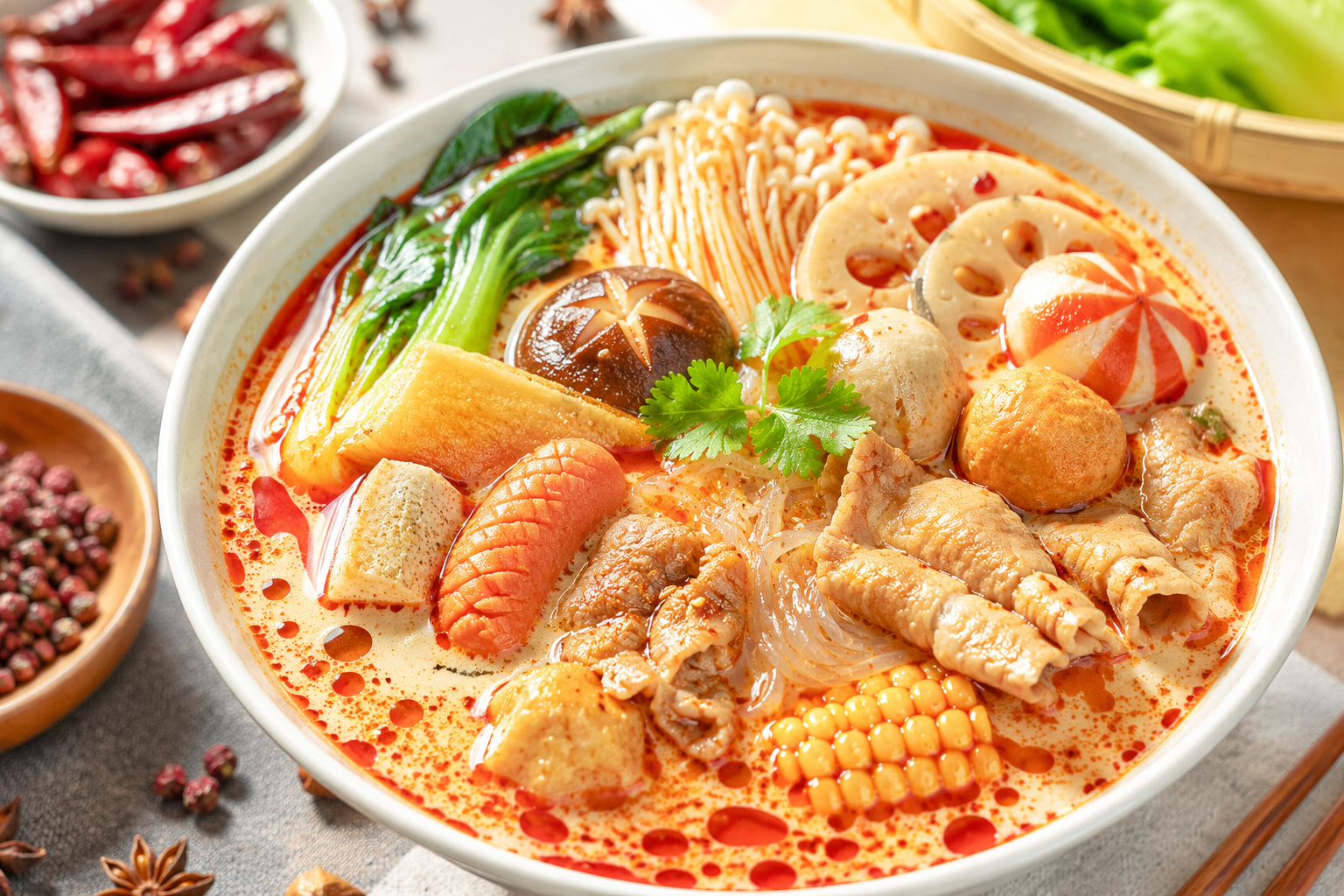
GuideWhy Malatang Is Growing in Japan | Seizing the Product Opportunity
An overview of why malatang (spicy hot soup) is gaining traction in Japan and why now is the ideal time to develop your own product. Covers the shift from Chinese communities to mainstream Japanese demand, plus the challenge of reproducing authentic flavor at scale.
 Guide
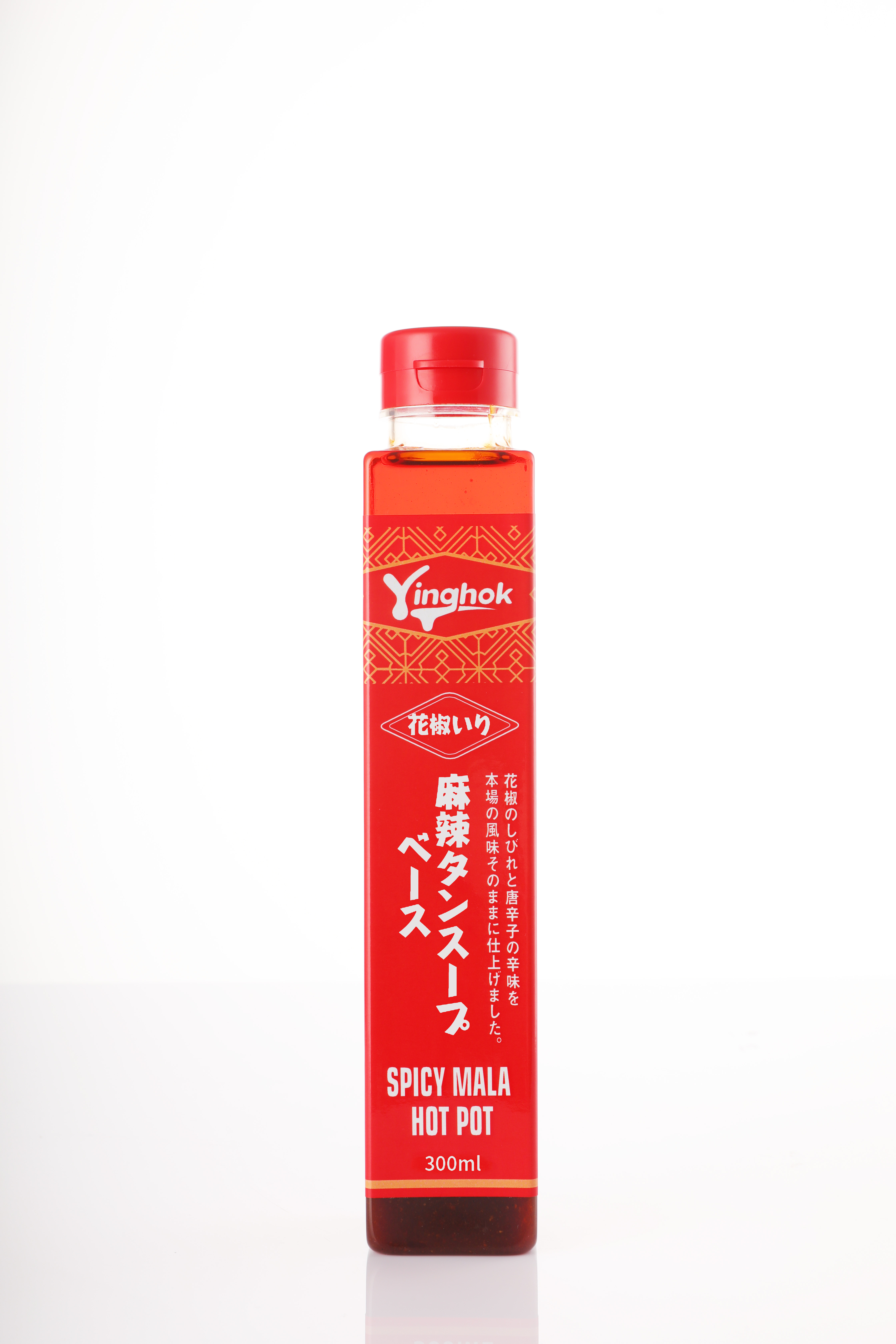
GuideHow to Choose Authentic Malatang Foodservice Soup Base | OEM & Regulatory Compliance
A guide to selecting foodservice malatang (mala tang) soup base. From authentic flavor building with Sichuan pepper, to cost reduction via 5x concentration, Japanese food regulatory compliance, and OEM & small-batch prototyping—compiled from a compound seasoning manufacturer's perspective.
 Guide
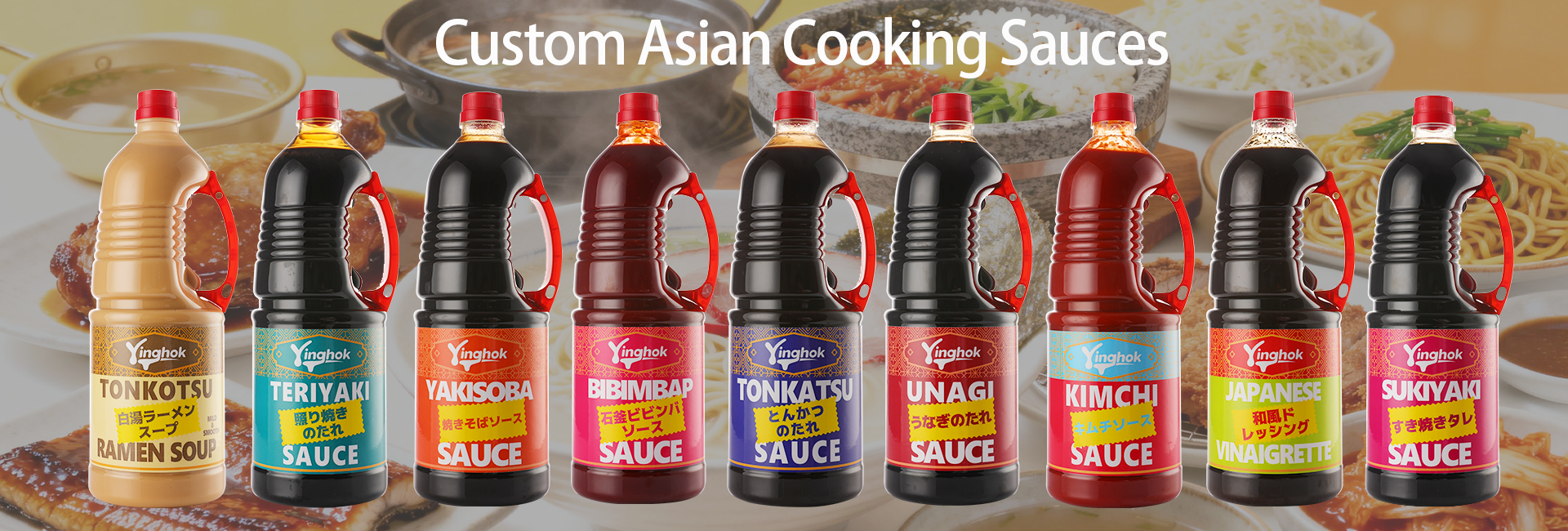
GuideCompound Seasoning OEM/Private Label: Bringing Your Own-Brand Seasonings to the World
A guide to developing compound seasonings via OEM/private label. Covers integrated production of sauces, tare, and soup bases, HALAL compliance, Japan-quality export capabilities, and key points from small-batch prototyping to mass production—written for B2B procurement professionals.